Yoga for Parkinson’s Disease: Muscle Activation Exercises to Improve Balance & Stability
Living with Parkinson’s disease can feel like your body has taken on a life of its own, but this Yoga for Parkinson’s Disease can help!
The tremors. The stiffness. The moments when your feet don’t quite respond the way you expect them to. It’s not just physically exhausting — it’s disorienting in a way that’s hard to put into words. When your body stops responding the way it used to, it’s natural to feel frustrated, isolated, or like you’ve lost a piece of yourself.
But here’s what I know after years of working with people in all stages of physical challenge — including my own recovery from a broken femur that snapped completely in half: your body wants to reconnect. It just needs the right signals.
That’s exactly what this practice is designed to do.
In this guided yoga session specifically for people living with Parkinson’s, I walk you through a series of gentle, purposeful muscle activation exercises rooted in my AYAMA™ Method — Applied Yoga Anatomy + Muscle Activation. The goal isn’t flexibility. It isn’t pushing through discomfort. It’s about rebuilding that neuromuscular connection between your brain and your muscles so your body can respond, contract, and move on demand.
A study published in the Journal of Neurology confirms what I’ve seen firsthand: consistent physical activity can meaningfully enhance balance and gait in people with Parkinson’s. Movement isn’t just helpful. It’s essential.
All you need is a mat, a chair nearby for support, and a willingness to start small.
What You’ll Need for this Yoga for Parkinson’s disease practice
- A yoga mat or comfortable floor space
- A sturdy chair (for support during standing poses)
- Comfortable, non-restrictive clothing
- About 20–30 minutes
This practice is suitable for all stages of Parkinson’s. If you’re in more advanced stages, simply keep one hand on your chair throughout the standing poses. There is no wrong way to do this — meeting your body where it is today is the practice.
Yoga for parkinson’s disease Practice: A Step-by-Step Guide
1. Foot Point & Flex (Seated on the Floor)
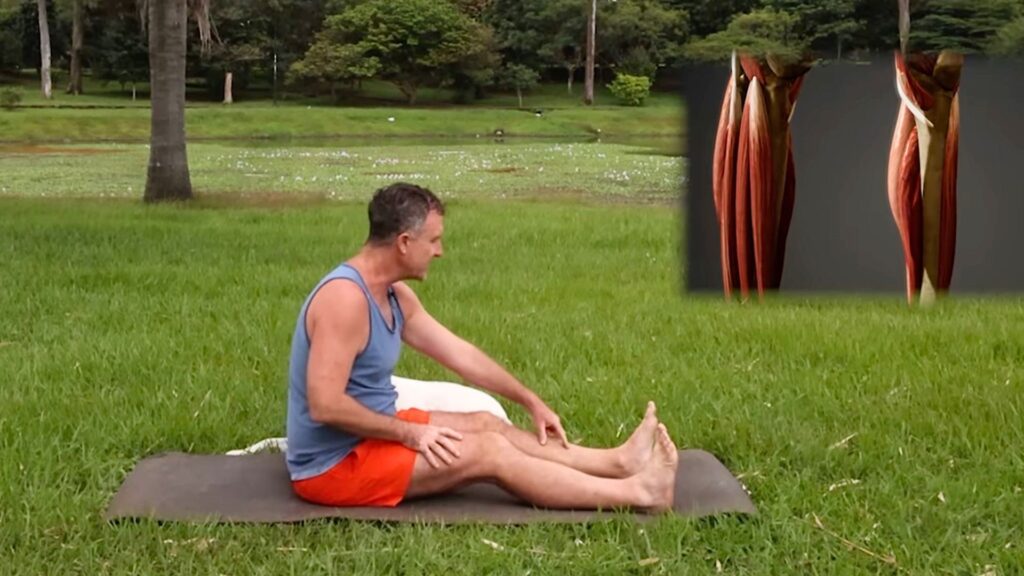
We start on the ground, and there’s a good reason for it.
So many balance issues begin in the feet. When the muscles of the feet aren’t activating properly, everything above them — your ankles, knees, hips — has to compensate. This simple exercise begins to wake those muscles back up.
How to do it:
- Sit on your mat with your legs extended in front of you
- Slowly point your feet away from you — don’t strain, just point
- Hold for about 6 seconds
- Then flex your feet, pulling the toes back toward your shins — this activates the anterior tibialis muscle along the front of your shin
- Hold for 6 seconds, then repeat
Important: Less is more here. If you feel cramping in the feet, back off. A small, controlled point is far more effective than straining for maximum range.
Repeat 5–8 times at your own pace.
2. Tadasana (Mountain Pose)
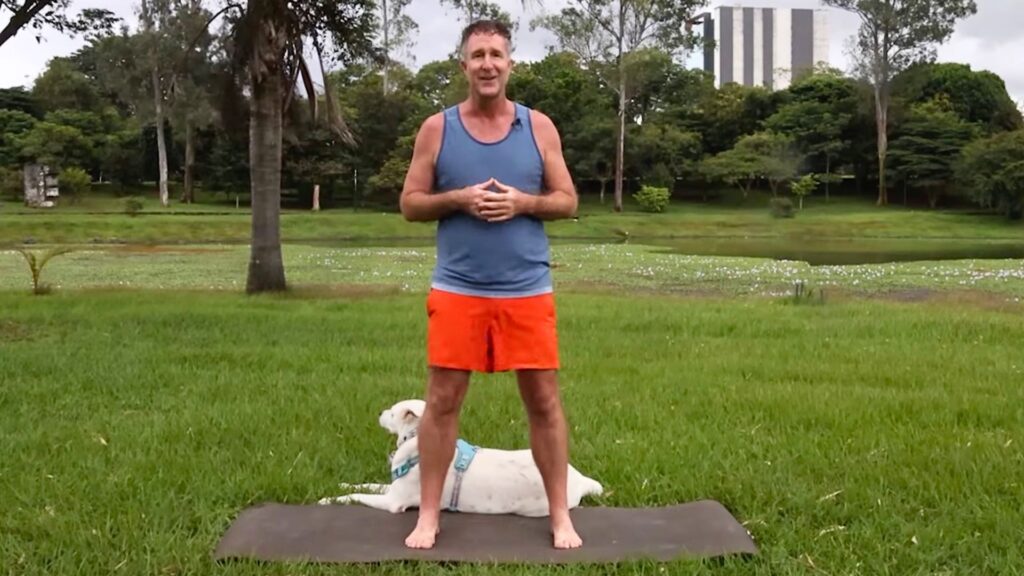
Once you’ve warmed up your feet, come to standing. If you need support, position your chair nearby.
Tadasana — Mountain Pose — sounds almost too simple to be useful. It’s not. When practiced with intention, it’s one of the most powerful poses for rebuilding proprioception (your body’s ability to sense its own position in space) and building confidence in your own stability.
How to do it:
- Stand with feet slightly wider than hip-distance apart
- Feel all four corners of your feet pressing into the floor
- Lift up through the inner legs
- Stand tall — imagine a thread pulling you gently upward through the crown of your head
- Let your arms rest at your sides
- Breathe
Stay here for several breaths, simply noticing how your body feels on the ground beneath you. This is the foundation everything else builds from.
3. Dynamic Tadasana (Arms Overhead)
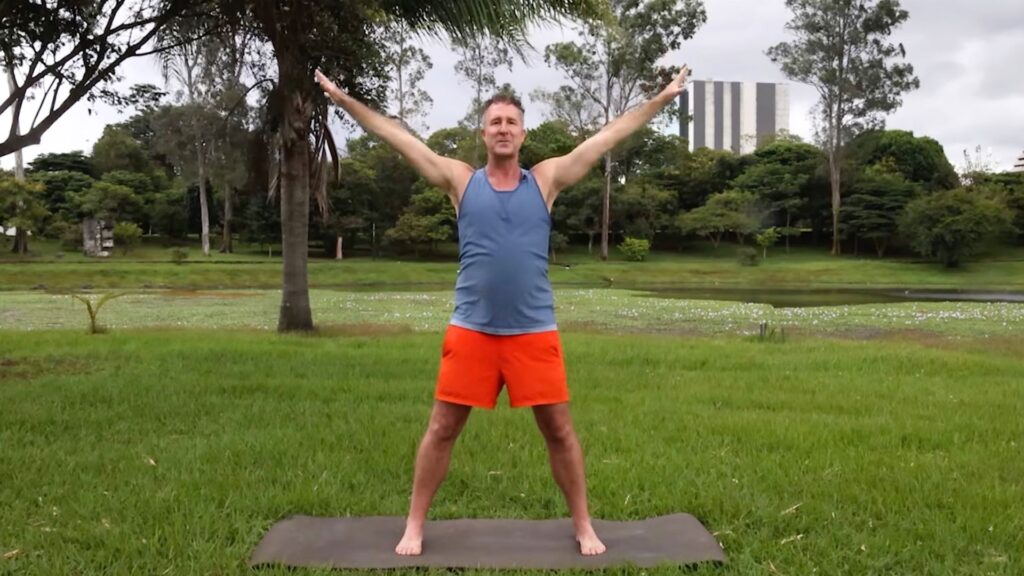
Once you’ve found your footing in Tadasana, we add movement.
How to do it:
- From Tadasana, inhale and sweep both arms up overhead, lifting your chest
- Exhale and bring the arms back down
- Repeat 5–6 times, moving with your breath
As you move, keep pressing all four corners of your feet into the earth. Squeeze gently through the hips toward the midline. Let the corners of your mouth turn upward — yes, that’s a cue, and yes, it matters.
4. Standing Forward Fold Variation
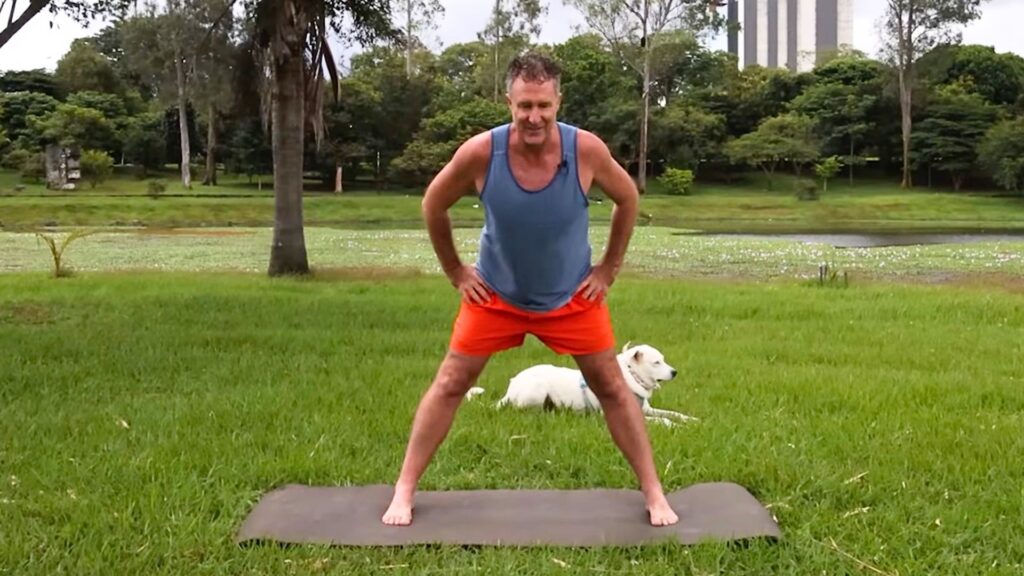
This is not a traditional forward fold — we’re not going for the floor. We’re going for activation.
How to do it:
- Bring your feet slightly wider than hip-distance, hands on your hips
- Inhale to lift your chest
- Exhale and hinge forward just 20–30 degrees — think of it as a slight bow, not a full fold
- Squeeze your core and abdominal muscles as you fold
- Inhale back to upright
- Repeat 5–6 times
For an added challenge: bring your arms out to the sides as you hinge forward. This challenges your balance in a safe, controlled way.
The goal here is building core activation and spinal awareness — two things that directly support better posture and gait.
5. Warrior II Variations
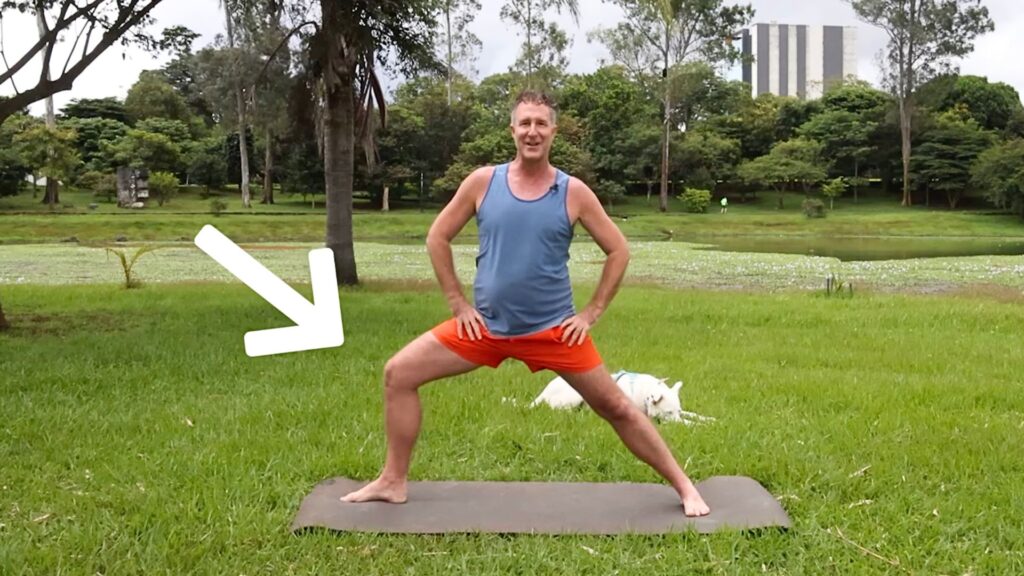
Warrior II is one of my favorite poses for Parkinson’s because it does so many things at once: it builds leg strength, challenges balance, activates the glutes, and trains your neuromuscular system to fire on demand.
You have options here. Choose what feels right for your body today:
- Hands on hips (most stable)
- Hands in Namaste mudra at the chest
- Arms extended out to the sides
- One hand on a chair, one arm extended — equally valid, equally powerful
How to do it (Right side first):
- Step your feet wide apart
- Turn your right foot to the right, aligning your front heel with the arch of your back foot
- Slowly bend your right knee as you exhale
- Inhale to straighten the leg
- Repeat 6–8 times, then switch sides
As you practice, push firmly through your back foot and feel your glute engage. You can place your hand on your glute to confirm it’s activating — I do this myself. That muscular feedback is the whole point.
The more you practice this, the more you rebuild the neuromuscular pathway between your brain and those muscles — which means those muscles become more responsive, more reliable, and more yours.
6. Tree Pose Variation (Dynamic Balance Practice)
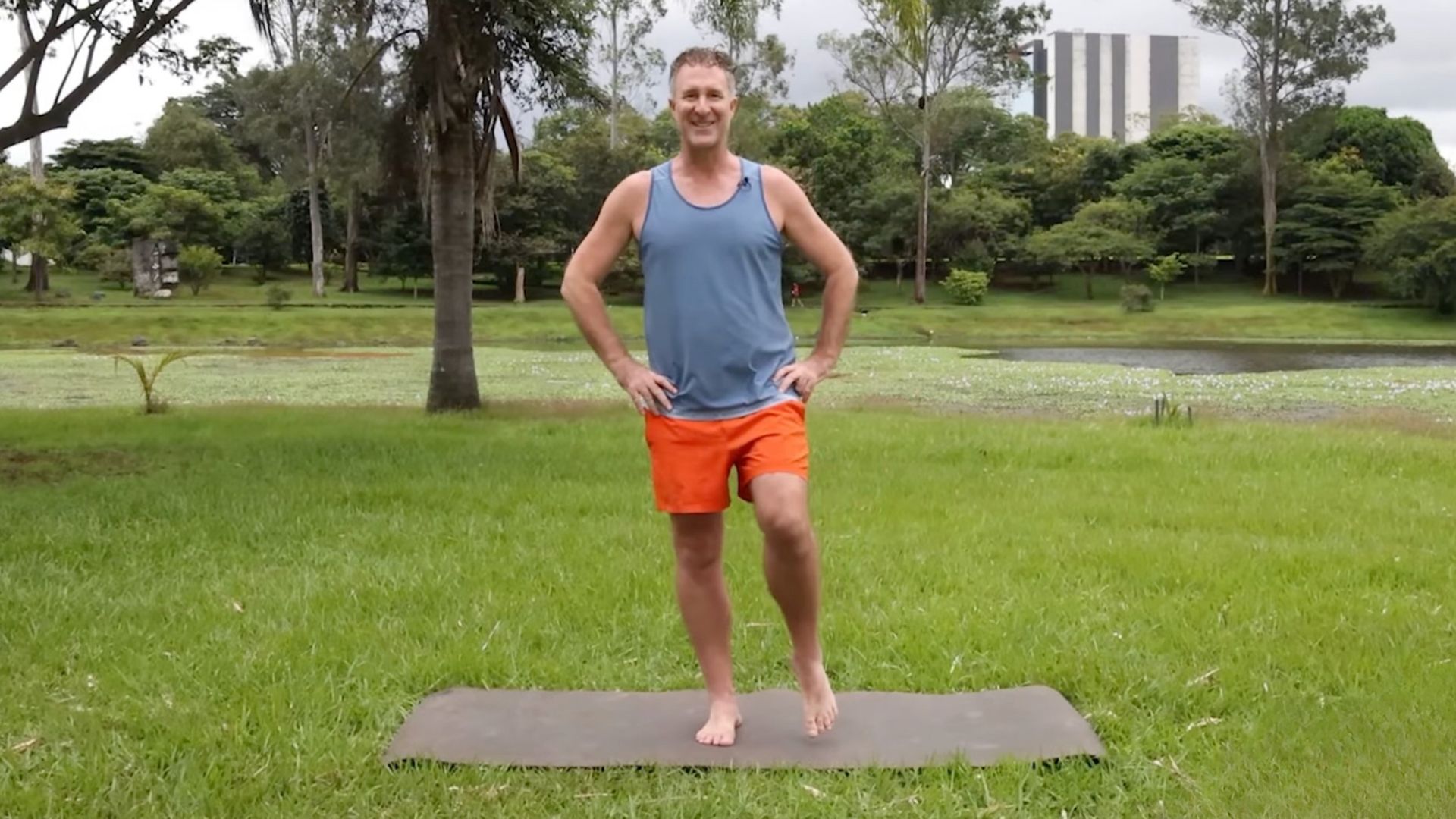
We’re not doing full tree pose here. We’re doing something more useful: practicing the act of balancing itself.
How to do it:
- Stand in Tadasana, hands on your hips or one hand on your chair
- Slowly lift one foot a few inches off the ground
- Hold for a moment — just a breath or two
- Lower it back down
- Switch sides
- Repeat 3–4 times on each side
You don’t need to lift high. Even a small lift, done with intention and a long spine, is exactly the right amount. Keep rising tall — notice when you tend to shrink down, and gently lift back up.
As this gets easier over time, try lifting a little higher or removing the hand from the chair. Progress at your pace.
7. Locust Pose (On Your Stomach)
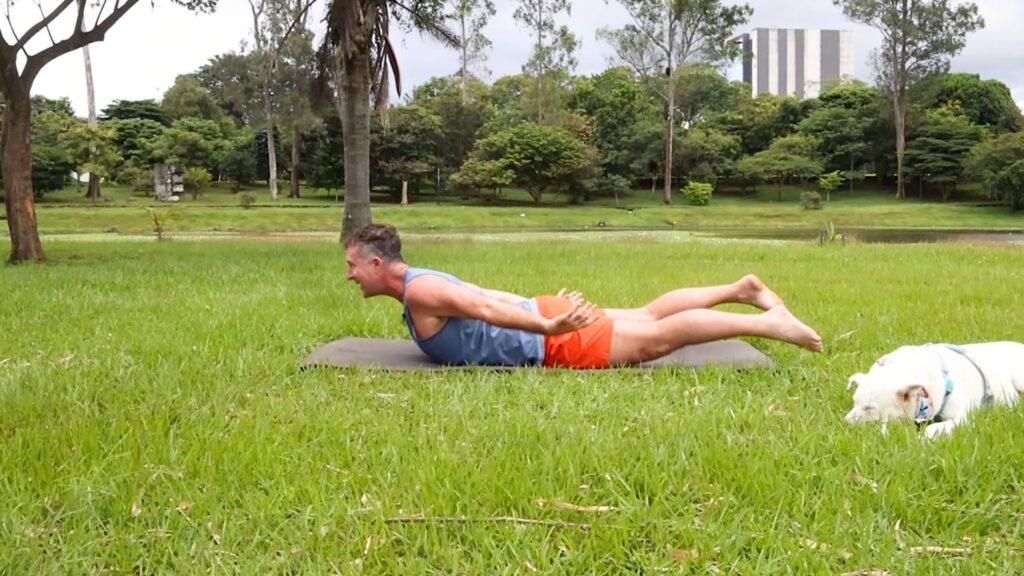
Come down to the floor and lie on your stomach. This pose activates the lower back muscles — critical for upright posture and stable walking.
How to do it:
- Lie face down, hands resting near your lower back
- Inhale and lift your legs off the ground — feel those lower back muscles engage under your hands
- Exhale and lower down
- Next round: lift your legs and your chest
- For the fullest version: extend your arms out to the sides like Superman as you lift
Stay within your comfortable range. Even a small lift with genuine muscular engagement is far more valuable than a big lift with tension and strain.
Repeat 4–5 times.
8. Bridge Pose (On Your Back)
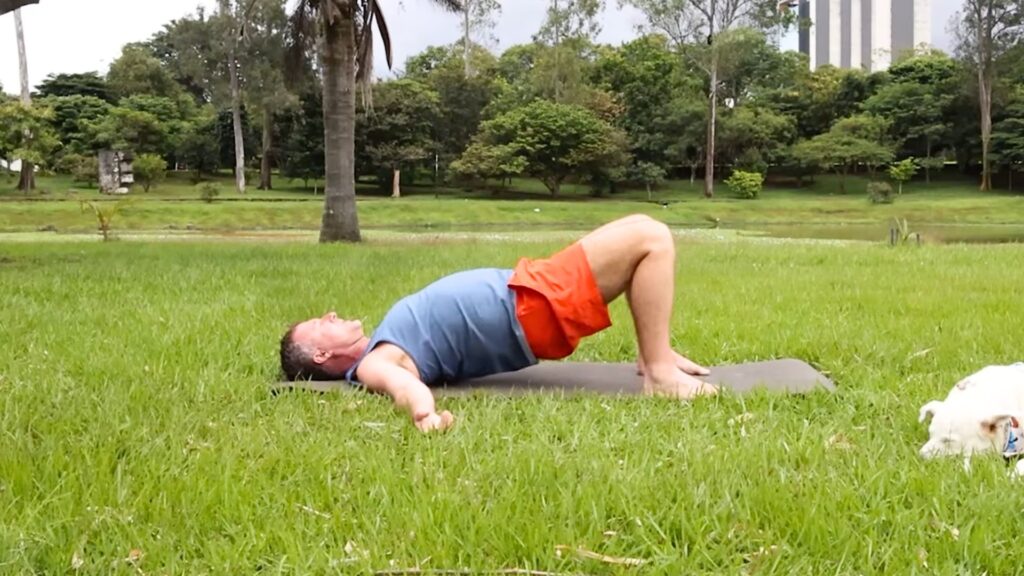
Roll onto your back and bend your knees, feet flat on the floor. This is Bridge Pose — and the keyword here is glutes.
How to do it:
- Place your arms along your sides
- Squeeze your glutes as firmly as you can — really feel them engage
- Press down through your heels
- Lift your hips off the floor
- Hold, then lower down slowly
- Repeat 4–6 times, lifting a little higher each time as you feel comfortable
Don’t be shy about placing your hands on your glutes to confirm they’re firing. Feeling the muscle work is part of training your brain to find it again.
9. Savasana (Final Rest)
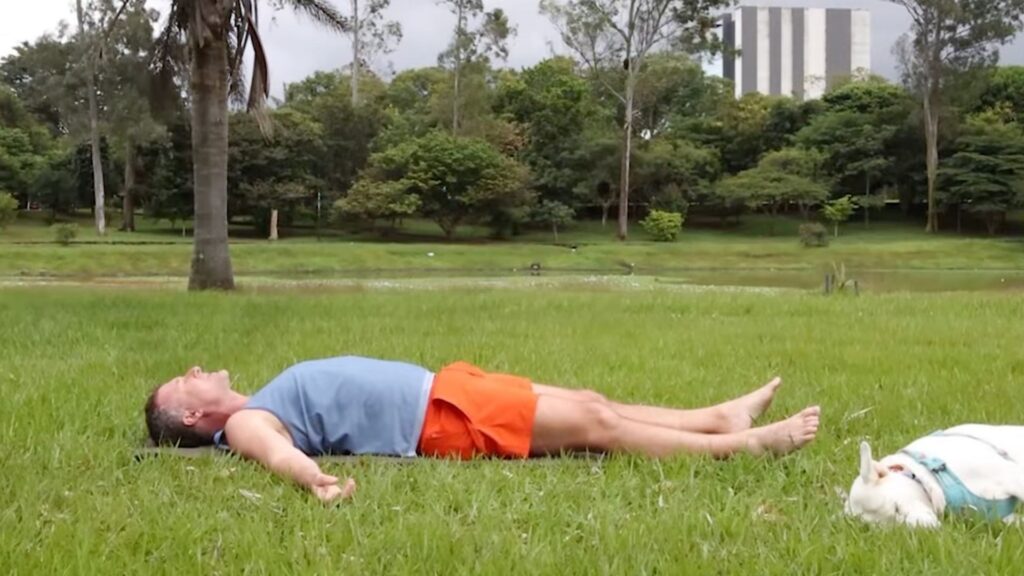
Stay here as long as you like.
Savasana isn’t just rest — it’s integration. This is the moment your nervous system absorbs everything you just did: the foot activation, the standing balance work, the core engagement, the glute firing. You’re giving your body new information, and your body is updating itself.
Let that happen. You’ve earned it.
Why This Approach Works for Parkinson’s
Traditional yoga focuses heavily on flexibility and stretching. That has its place — but for people living with Parkinson’s, the missing piece is usually not flexibility. It’s neuromuscular activation.
The AYAMA™ Method targets this directly. By practicing specific muscle activation sequences — like the ones in this video — you’re not just stretching. You’re sending deliberate signals from your brain to your muscles, strengthening the communication pathways that Parkinson’s can disrupt.
The result? Muscles that respond more reliably. Balance that builds over time. A body that feels more like yours again.
Start small. Stay consistent. The progress will come.
Want to Go Deeper?
If this practice resonated with you, I’d love to support you further. Explore the AYAMA™ Method for more muscle activation-based practices, or join The Yogi Club, an on-demand platform for regular guidance on living pain-free and fully.
You can do this. Every step forward — no matter how small — is an investment in a better tomorrow.
About The Author, Yogi Aaron
Yogi Aaron is the founder and creator of Applied Yoga Anatomy + Muscle Activation™ (AYAMA), a revolutionary methodology
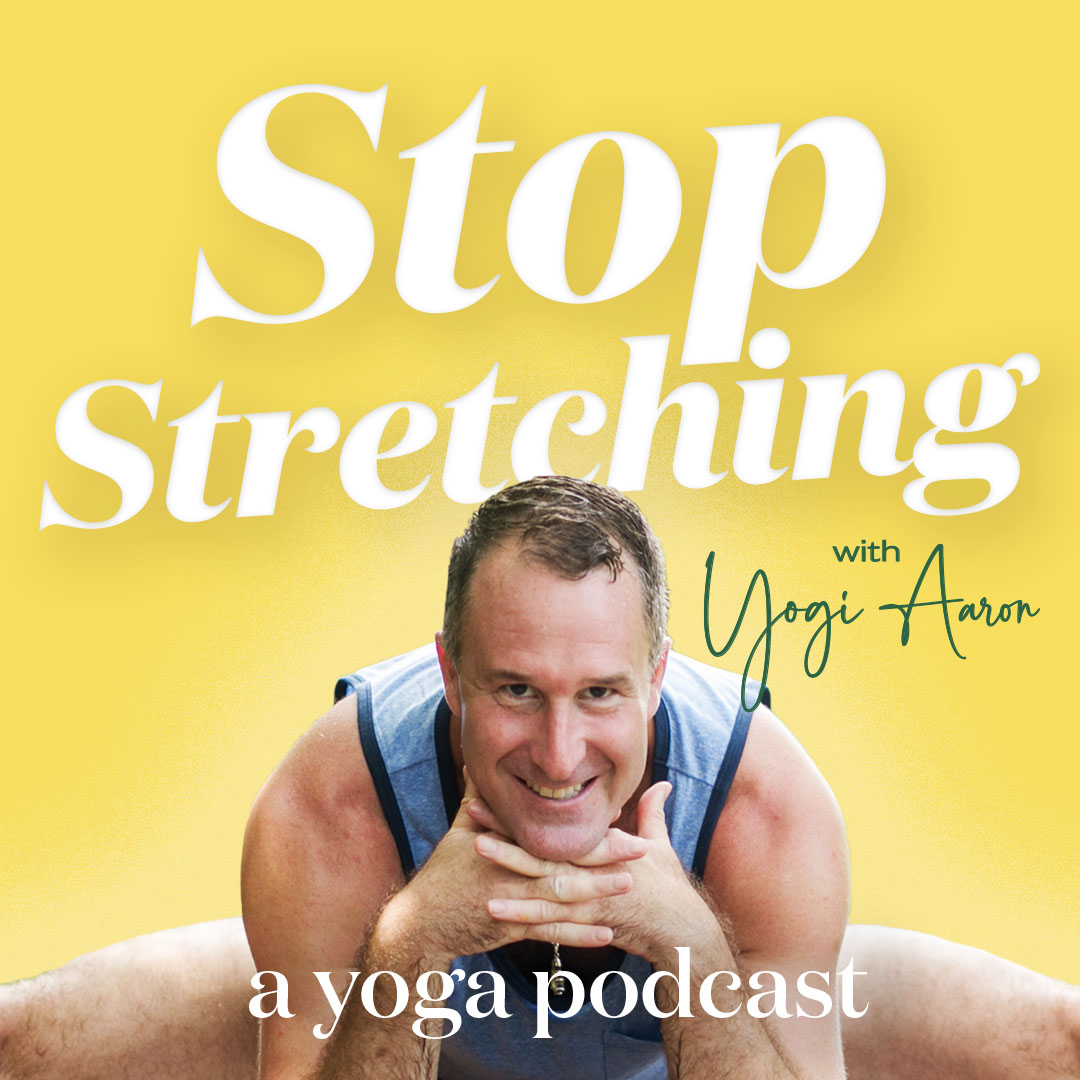
that challenges conventional approaches to yoga. Using a science-backed approach, he prioritizes muscle activation over traditional stretching.
With over three decades of dedicated study, mentorship, and hands-on experience, he has established himself as a leading expert in yoga therapy, alignment, and pain-free movement.
As owner and operator of Blue Osa Yoga Retreat + Spa in Costa Rica, Yogi Aaron leads transformative programs that combine his expertise in yoga instruction, retreat facilitation, and wellness business operations. His work spans both in-person immersive experiences and digital education through The Yogi Club online platform and the AYAMA™ Certification Program.
Yogi Aaron’s teaching methodology represents a paradigm shift in modern yoga practice. AYAMA focuses on activating and engaging muscles to enhance range of motion, build strength, improve stability, and optimize alignment—while reducing pain and injury risk. This evidence-based approach has positioned him as a thought leader challenging the status quo in the yoga community.
His mission extends beyond the mat: to liberate individuals from chronic pain and guide them toward discovering yoga’s authentic purpose through intelligent, body-informed practice.
Learn more about training opportunities with Yogi Aaron at Blue Osa Yoga Retreat + Spa.
Check out these other popular posts!