Child’s Pose and Your Spine: The 5 Muscles It Secretly Disables
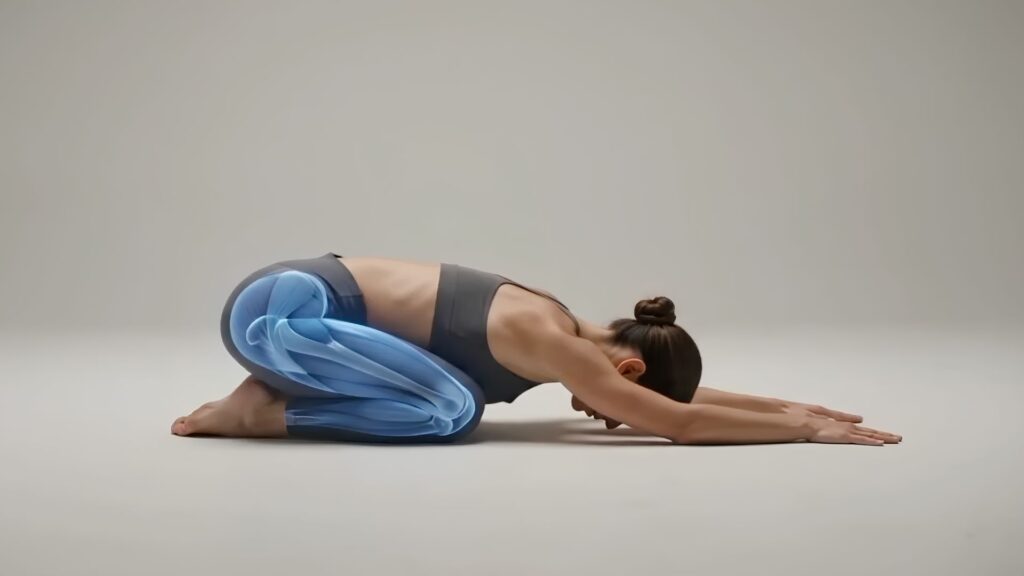
Child’s pose is the shape almost every yoga teacher calls your safe space — your rest, the place to come back to your breath. But according to Yogi Aaron, who has taught yoga for more than thirty years, that gentle reputation hides a real problem. In his view, child’s pose is not the harmless reset most students assume it is. He goes so far as to say it played a part in the spinal degeneration that eventually led a surgeon to recommend fusing his spine.
That is a bold claim, and this article unpacks the reasoning behind it. Below, Yogi Aaron explains what he believes child’s pose is doing to your spine, the five muscle groups it can quietly switch off, a 30-second test you can run on your own body, and the poses he recommends in its place.
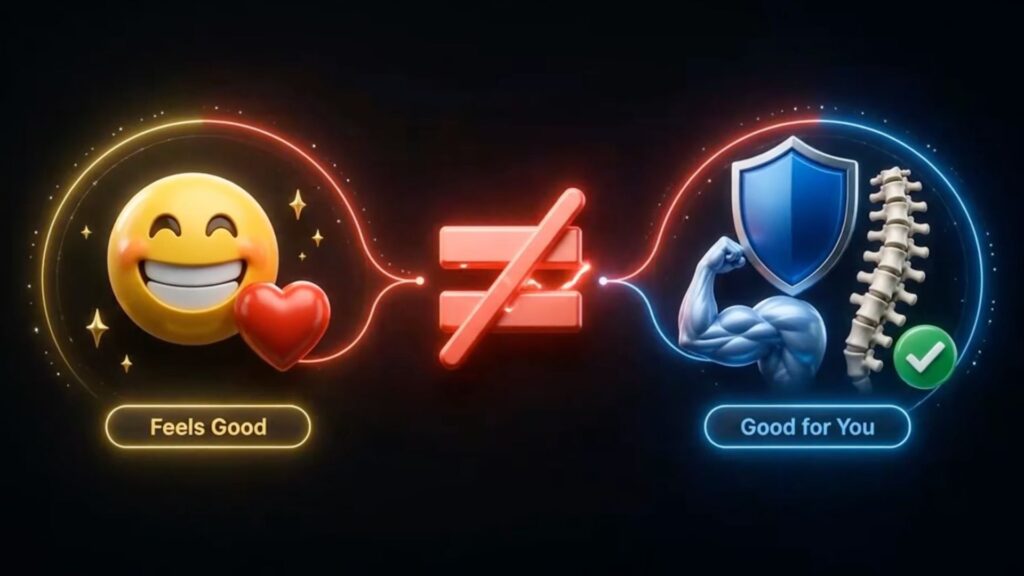
“Feels Good” and “Good for You” Are Not the Same Thing
The appeal of child’s pose is obvious. You fold forward over your thighs, sink your hips toward your heels, and breathe. It feels safe. It feels like relief.
But Yogi Aaron draws a sharp line between what feels good and what actually serves your body. Plenty of things feel good in the moment without being good for you over time. The warm, melting sensation of child’s pose, he argues, can mask something far less restful happening underneath: several of the muscles that stabilize your spine going offline at the same time.
How a Muscle Gets “Shut Down”
To understand his argument, it helps to know how a muscle stops doing its job in the first place. Yogi Aaron describes two mechanisms.
1. Overstretching (pulling a muscle long)
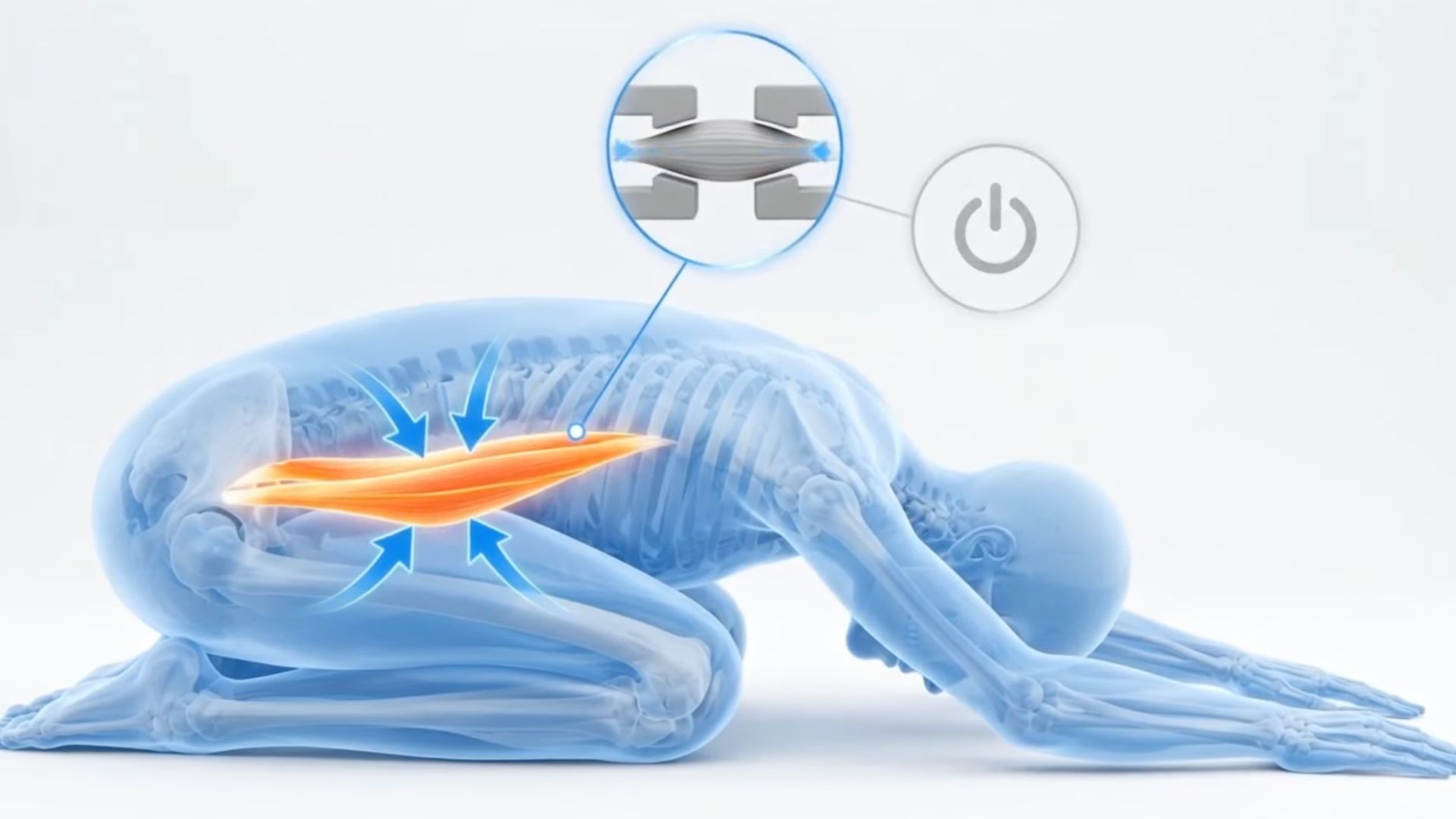
When you passively stretch a muscle — letting gravity sink you into a position and draw the muscle long — you can weaken its ability to contract. The connection between the brain and the muscle dims. And a muscle that cannot contract on demand cannot protect the joint it is responsible for.
2. Jamming a muscle short
The opposite also shuts a muscle down. When you cram a muscle into a fully shortened position — past the range it can actually control — it has no room left to work, so it switches off.
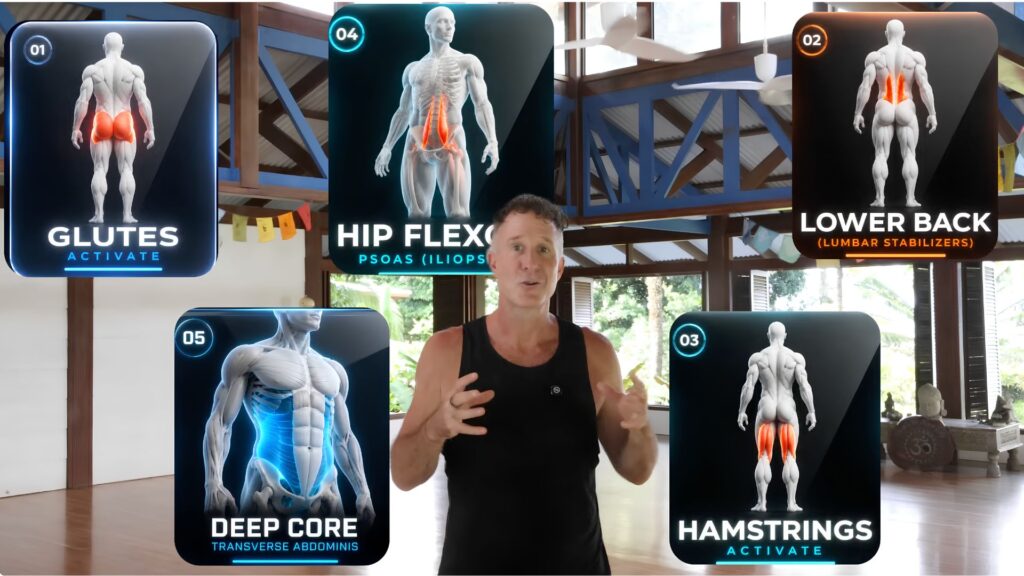
Here is the catch with child’s pose: it does both at once. Sit your hips back onto your heels and gravity pulls one set of muscles long. Fold your trunk down onto your thighs, and you jam another set short. One pose, two shut-down mechanisms, and by Yogi Aaron’s count, five muscle groups going quiet — like flipping off a row of light switches.
Test Child’s Pose on Your Own Body in 30 Seconds
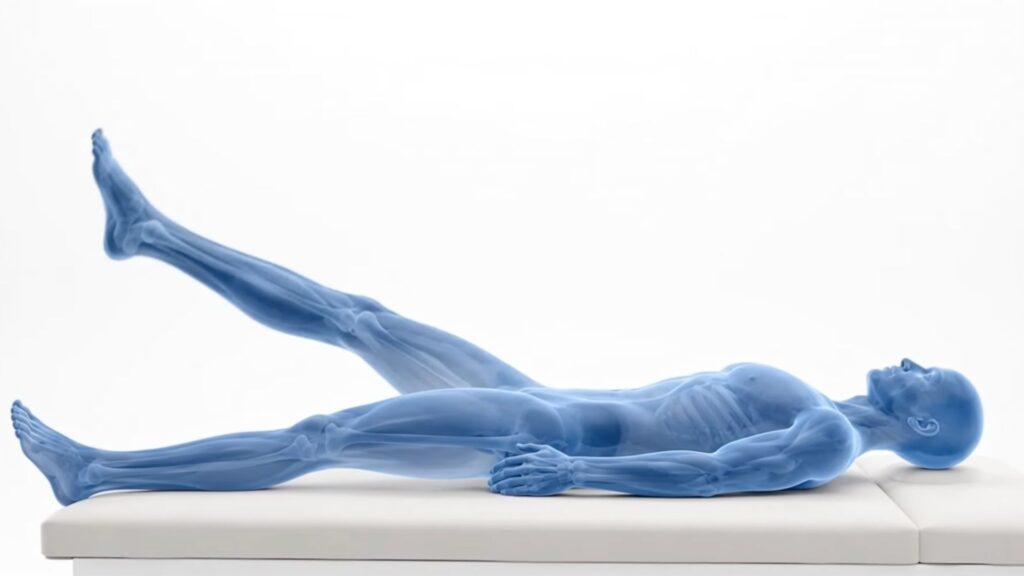
You do not have to take his word for it. Yogi Aaron teaches a simple self-test. Go slowly — if you rush, your fast-twitch fibers fire and hide the weakness. And if your lower back hurts at any point, stop and lower down.
- Baseline. Lie on your back. Slowly lift one leg to a count of five. Notice how heavy it feels and whether you twist or grip in your lower back. Lower it slowly, then repeat with the other leg. Finally, lift both legs together — the harder test — and notice the effort.
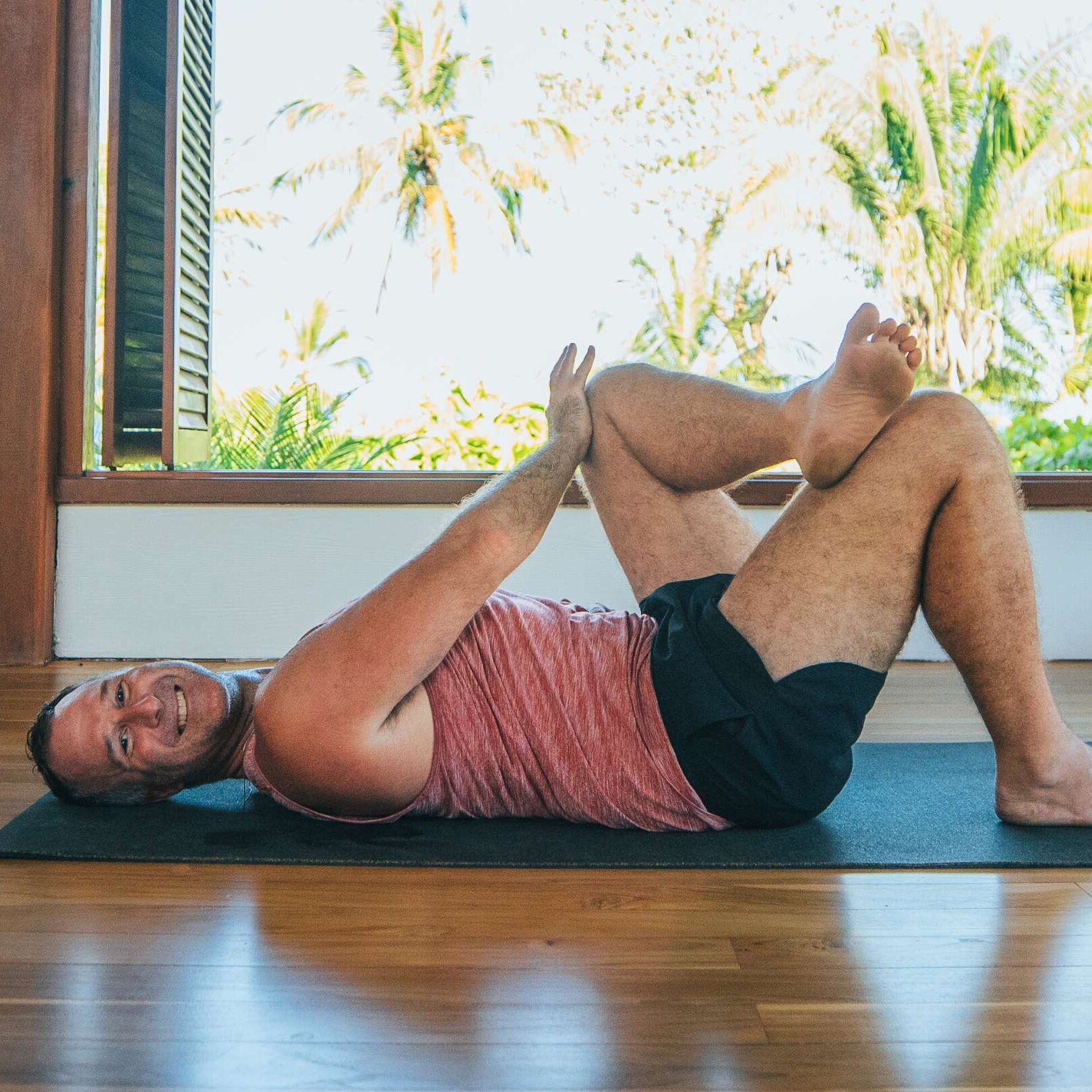
- Activate. Bend your knees and bring them over your hips. Reach your hands toward your knees and press your knees into your hands (knees into hands, not hands into knees). Hold the press for six seconds, and repeat six times.
- Retest. Lift each leg slowly again. Most people find the legs feel noticeably lighter and any low-back tightness has eased. That is activation waking the muscles up.
- Now hold child’s pose. Sink down for 30 seconds to a minute, then repeat the slow leg lift one more time.
For most people, that final lift feels heavier again. In Yogi Aaron’s framing, activation switched the muscles on, and child’s pose switched them back off. That, he says, is not rest — it is a shutdown.
Why does it matter? When your core and hip flexors are firing, they lift your legs while your back stays quiet. When child’s pose switches those muscles off, your lower back is forced to take over a job it was never meant to do — and that is the ache many people feel. His warning: do not “fix” that ache by pressing your lower back into the floor. That only trains your spine to carry a load it was not built for.
The 5 Muscle Groups Child’s Pose Shuts Down
1. Your glutes
As you sit back on your heels, gravity draws your glutes long and switches them off. Yogi Aaron calls the glutes the body’s suspension system — the shock absorbers for every step, bend, lift, and bag of groceries. When they are offline, that load does not vanish. It drops somewhere else: usually the lower back and knees.
2. Your lower-back muscles
In child’s pose your spine rounds forward into deep flexion — essentially the same shape you hold sitting in a chair all day. Those muscles get stretched long, but Yogi Aaron argues they do not need lengthening. They need to shorten in order to function. Yoga, in his view, should be where you do the opposite of your daily slump, not where you rehearse it.
3. Your hamstrings
With the knees folded and the hips sunk back, the hamstrings are drawn into a passively lengthened, slightly overstretched position. On its own it is minor, but it adds up — three muscle groups pulled long and switched off just from sinking down.
4. Your psoas and hip flexors
Now the shortening side. The psoas is a primary hip flexor and, alongside the glutes, one of the most important muscles for the stability of your pelvis, lower back, hips, and knees. Folding your trunk fully onto your thighs crams the psoas into a shortened position past what it can control, and it shuts off.
This is where Yogi Aaron says most students get misread. The stiff student he affectionately calls “Stiff Biff” folds into child’s pose, feels pain at the front of the hips, and is told his hips are tight and he needs to stretch. But in Yogi Aaron’s assessment, the psoas is not too short — it is too weak. And stretching a weak muscle only makes it weaker.
5. Your deep core
Finally, collapsing your trunk down jams the deep core muscles — the trunk flexors meant to hold you up from the inside — into a slump where they cannot fire. There is a related detail most people miss: folded up in child’s pose, your diaphragm is compressed and full breathing becomes difficult, so the core cannot properly engage.
Why This Matters for Your Spine
Add it up: glutes, lower back, and hamstrings pulled long; psoas and deep core crushed short. Yogi Aaron argues that holding the pose for even ten to sixty seconds begins to undo the stability across your whole body.
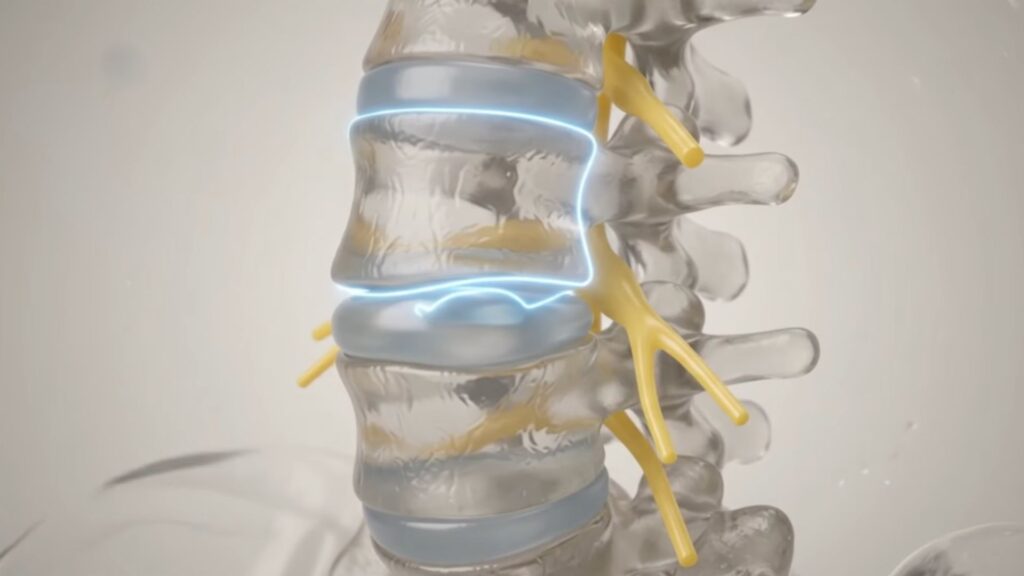
Your spine is a stack of joints, and the muscles above are the ones that hold that stack steady. Child’s pose does not damage the spine directly, he clarifies — it disables the muscles that protect it, and then you go and live the rest of your life on top of an unsupported spine. The wear and tear sets in faster than it should. That degeneration, he says, is what his own scans show, and what he is convinced twenty-five years of switching these muscles off did to his back.
What Yogi Aaron Recommends Instead of Child’s Pose
The good news: you are not left without options. He suggests two directions depending on what you actually need.
For genuine rest: crocodile pose or shavasana
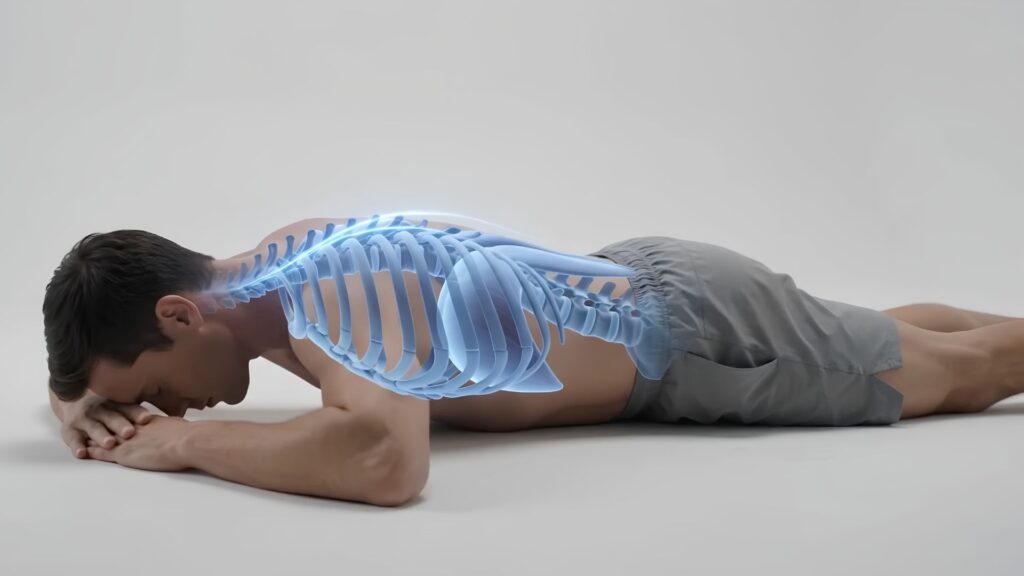
If you simply want to stop and return to your breath, Yogi Aaron’s favorite is crocodile pose — lying belly-down with your forehead resting on your hands. Lying on your belly naturally restores deep diaphragmatic breathing, giving you real rest without switching your muscles off. Shavasana works well too.
To wake the muscles back up: bridge pose
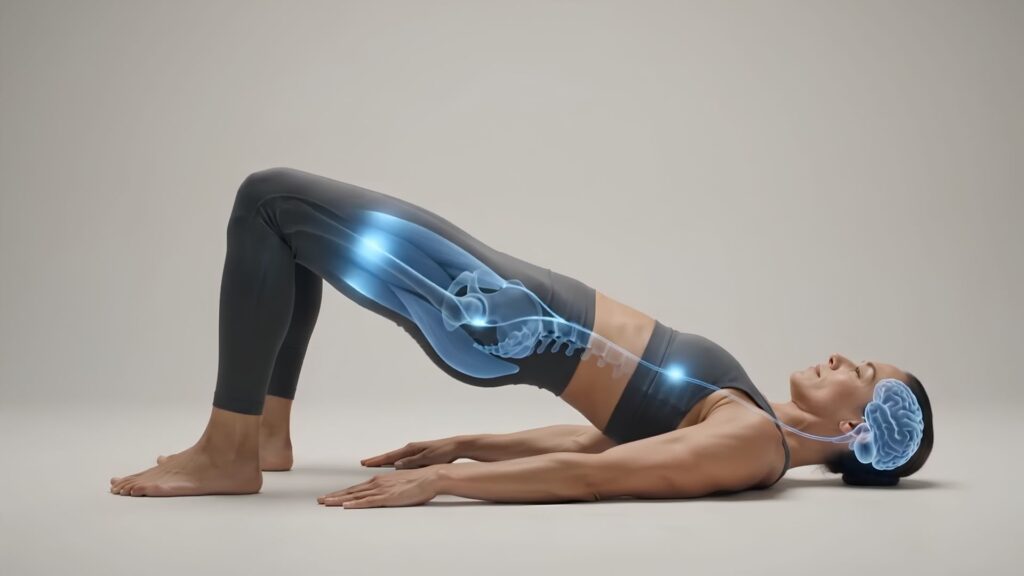
Rest is one thing, but if those five groups have been going offline every practice, they need to be switched back on. If Yogi Aaron could give you only one pose for that, it would be bridge.
Come onto your back with your arms by your sides. Press down through your heels and squeeze your glutes as you lift your hips, holding for about six seconds, then lower. Repeat for six reps. That six-seconds-by-six-reps dose, he explains, is roughly the minimum your nervous system needs to reestablish the connection between brain and muscle. Where child’s pose switches the glutes off, bridge pose switches them back on. If you have low-back pain and have been using child’s pose to soothe it, this is the swap he wants you to try.
The Real Fix: Understanding the Body Beneath the Poses
Bridge pose is one piece of a larger sequence. Yogi Aaron’s method — the AYAMA™ Method (Applied Yoga Anatomy + Muscle Activation) — is built around switching all five of these muscle groups back on in the right order, and more broadly around understanding what is actually happening in the body underneath every pose you practice or teach.
He has packaged a starting point into a free AYAMA Starter Kit, and he goes far deeper during his immersions and trainings at Blue Osa in Costa Rica. Yoga teachers who arrive having already completed 200-hour trainings, he notes, routinely tell him that most of what he covers was never part of their education.
Watch the Full Breakdown
Yogi Aaron demonstrates the test, walks through all five muscle groups, and teaches the bridge-pose fix in the full video.
If child’s pose has been your go-to rest, try the 30-second test for yourself first, then watch him walk through it — and notice whether your own body responds the way he describes.
Frequently Asked Questions
Is child’s pose bad for your back?
Not inherently — but Yogi Aaron argues that holding child’s pose can switch off the muscles that stabilize your spine, leaving your lower back to absorb loads it was not designed for. The concern is less the pose itself and more using it as long-held “rest” while the supporting muscles go offline.
Should I stop doing child’s pose completely?
You do not have to treat it as forbidden. Yogi Aaron’s point is that child’s pose is not the recovery tool most people think it is. If you want true rest, he suggests crocodile pose or shavasana instead; if you want to rebuild stability, he points to activation work like bridge pose.
Why does my lower back hurt in child’s pose?
According to Yogi Aaron, that ache often means your core and hip flexors have shut off, forcing your lower back to do their job. He specifically cautions against pressing your back into the floor to relieve it, since that trains your spine to carry a load it should not.
What is a good alternative to child’s pose for rest?
Crocodile pose — belly down with your forehead on your hands — is Yogi Aaron’s favorite because lying face down naturally restores deep diaphragmatic breathing. Shavasana is another restful option that does not jam or overstretch the stabilizing muscles.
What Comes Next
At the start of the video, Yogi Aaron shows his own scans — the darkened discs a surgeon pointed to when recommending a fusion. But that is only the opening of the story. How the herniated discs happened, the moment everything came apart, and what he found that pulled him back from surgery is a story worth telling on its own. Watch this video next to hear more of Yogi Aaron’s story!
About The Author, Yogi Aaron
Yogi Aaron is the founder and creator of Applied Yoga Anatomy + Muscle Activation™ (AYAMA), a revolutionary methodology
that challenges conventional approaches to yoga. Using a science-backed approach, he prioritizes muscle activation over traditional stretching.
With over three decades of dedicated study, mentorship, and hands-on experience, he has established himself as a leading expert in yoga therapy, alignment, and pain-free movement.
As owner and operator of Blue Osa Yoga Retreat + Spa in Costa Rica, Yogi Aaron leads transformative programs that combine his expertise in yoga instruction, retreat facilitation, and wellness business operations. His work spans both in-person immersive experiences and digital education through The Yogi Club online platform and the AYAMA™ Certification Program.
Yogi Aaron’s teaching methodology represents a paradigm shift in modern yoga practice. AYAMA focuses on activating and engaging muscles to enhance range of motion, build strength, improve stability, and optimize alignment—while reducing pain and injury risk. This evidence-based approach has positioned him as a thought leader challenging the status quo in the yoga community.
His mission extends beyond the mat: to liberate individuals from chronic pain and guide them toward discovering yoga’s authentic purpose through intelligent, body-informed practice.
Learn more about training opportunities with Yogi Aaron at Blue Osa Yoga Retreat + Spa.
Check out these other popular posts!