Is Pigeon Pose Bad for You? Here’s What It’s Actually Doing to Your Hips.
Is pigeon pose bad for you? If your hips feel tight no matter how often you stretch them, this is a fair question to ask, since pigeon pose is one of the most common poses in yoga, and one of the most misunderstood.
I taught it for most of my 30 years as a yoga teacher. I cued it, demonstrated it, and told my students it would open their hips and release tension they’d been carrying for years.
Until I understood what it was actually doing to their bodies.
If you’ve been relying on pigeon pose as your go-to hip opener and the tightness always seems to come back, in this blog I’m going to explain why, and what to do instead.
Read on or press play to watch the full breakdown.
The Pigeon Pose Test That Changes Everything
Try this right now, before you read another word.
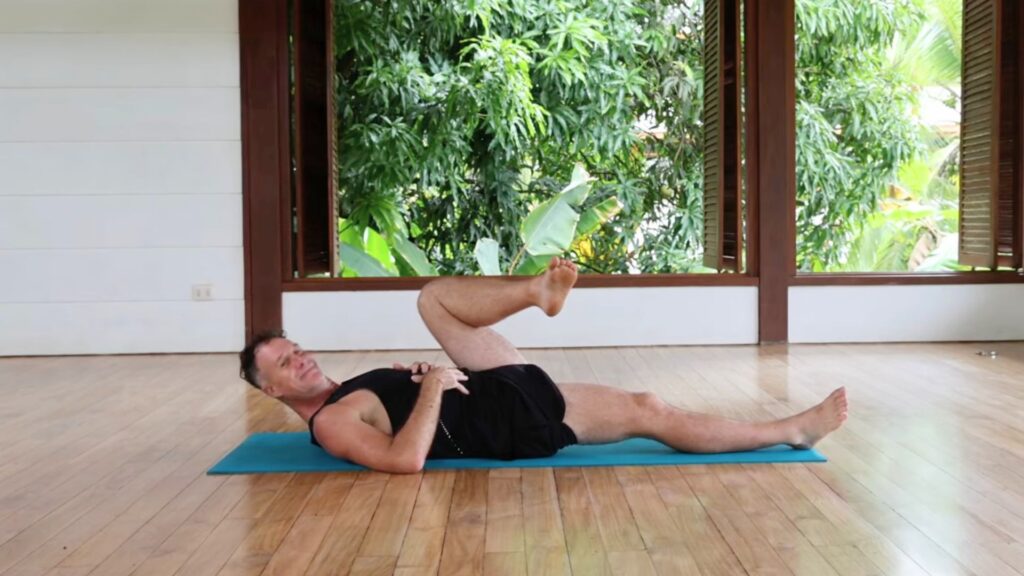
Lie on your back. Don’t use your hands. Try to bring one leg into pigeon pose position using only your own muscles.
Notice how far you get. Maybe a third of the way. Maybe halfway if you’re quite mobile.
That’s your active range of motion. That’s the range your muscles can actually control on their own, without help from gravity or body weight.
Now think about full pigeon pose. You’re taking that same leg all the way to the ground, using gravity and your own body weight to force it there.
So ask yourself the question that changed everything for me: “What happens to a muscle when you force it into a range of motion it cannot actively reach on its own?”
It shuts down. The neurological signal between your brain and that muscle gets inhibited. The muscle loses its ability to do its job, at least temporarily.
And we’ve been calling that a hip opener.
Tight Hips or Unstable Hips? How to Tell the Difference
Most people assume tight hips means the muscles are short and need lengthening. In my experience, that’s rarely the actual story.
Here’s a simple way to check which one you’re dealing with.
Lie on your back with both knees bent, feet flat on the floor. Slowly let one knee drop out to the side, only as far as you can control it with your own muscles. Stop the moment you feel like you’re no longer controlling the movement and gravity has taken over.
Now compare that to how far the knee falls when you completely relax and let it drop on its own.
If there’s a big gap between those two points, that’s not really a flexibility problem. That’s a control problem. Your hip has more passive range than your muscles can actually stabilize, which means the tension you feel day-to-day is often your body’s own protective response to that gap, not the cause of it.
This is the piece almost nobody explains when they hand you another hip opener sequence. The goal was never to close that gap by further increasing your passive range with deep stretches. The goal is to shrink the gap by improving how much of your existing range your muscles can actually control.
What’s Actually Happening to Your Glutes
Your glutes are the shock absorbers and the suspension system of your body. They stabilize your pelvis. They protect your lower back. They absorb force every time you walk, stand, run, or move through your day.
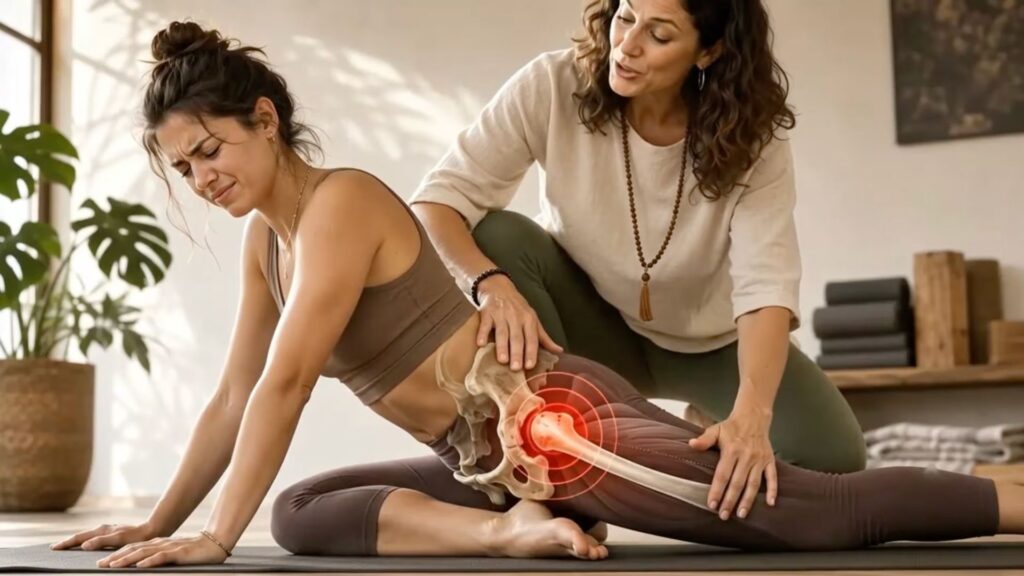
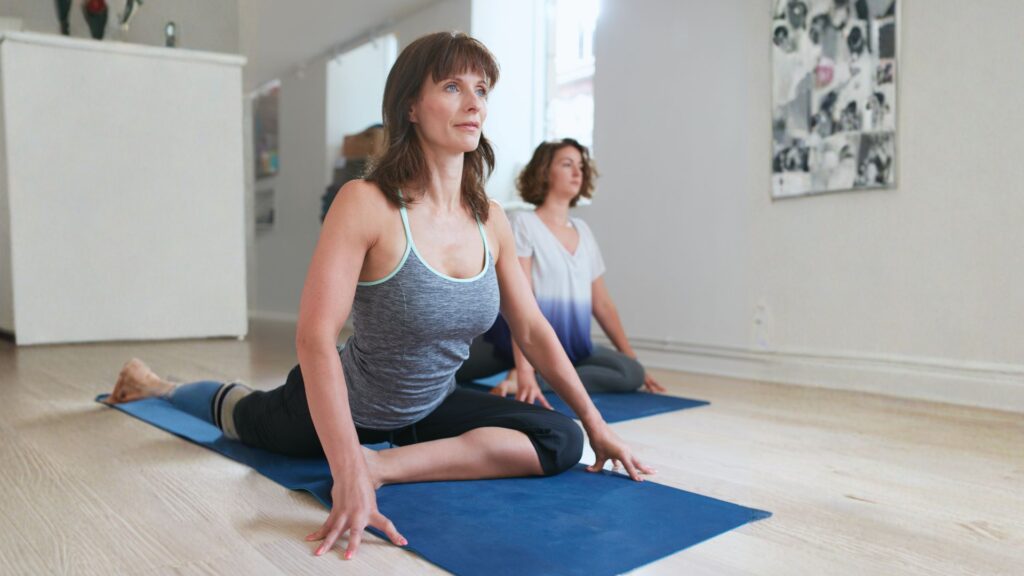
Pigeon pose stretches the glutes and the deep hip rotators well past their active range. Every time you sink into it, you’re telling those muscles to stand down. You’re deactivating the most important stabilizers you have, right when you need them most.
This is where I have a real problem with the phrase “opening your hips.” What does that actually mean? Open to what? For what purpose? Nobody who says it seems to have a clear answer.
Biomechanically, what’s happening is overstretching of the glutes and the hip rotator muscles, and it leaves your entire pelvic structure more vulnerable, not less. Your hips don’t need to be more open. In almost every case I’ve seen, they need to be more stable.
Every time you stretch a muscle past its active range of motion, you deactivate it. Every time. That’s not my opinion. That’s how the neuromuscular system works.
So is pigeon pose bad for you specifically? If your glutes and hip rotators are already underactive, which is common if you sit a lot, yes, this pose is very likely making that worse rather than better.
Why It Feels So Good, and Why That’s the Problem
I know what you’re thinking. Pigeon pose feels amazing. Your hips feel so much better right after. So how can something that feels this good actually be bad for you?
I hear that. And I understand exactly why, because it’s the same reason it keeps you stuck in the exact pattern you’re trying to escape.
Just because something feels good doesn’t mean it’s good for you. A line of cocaine feels good too. That doesn’t mean you should do it.
This is a real problem in yoga right now. Teachers who were never properly taught anatomy are telling students to chase what feels good in the moment. What feels good right now can leave your body worse off an hour later, or the next morning.
Feeling good is not the same as doing good.
When you passively stretch a muscle, you get temporary release. The tension dissipates, and for a few minutes, maybe longer, you feel better. But what you’ve actually done is reduce that muscle’s ability to contract on demand. You’ve made it less stable, not more.
And within hours, sometimes minutes, the tension comes right back. Because the underlying issue was never addressed. You just numbed it for a while.
I had a student who came to me with deep piriformis pain, the kind that radiates down the leg. She’d been doing pigeon pose every single day for months. It felt good for a few minutes afterward. Then the pain returned. Every single time, without fail.
We stopped the pigeon pose entirely. We started activating her glutes and the surrounding hip muscles instead. Over time, the pain didn’t just get better. It resolved completely.
Because she stopped masking the problem and started fixing it.
Pigeon Pose Alternatives That Actually Work
If stretching isn’t the answer, what is?
Tight hips are rarely a flexibility problem. They’re usually an instability problem. When the glutes and hip flexors aren’t firing properly, the body creates tension nearby as a kind of protection. Stretch that tension away, and you often create more instability, so the tightness returns. Sometimes worse than before.
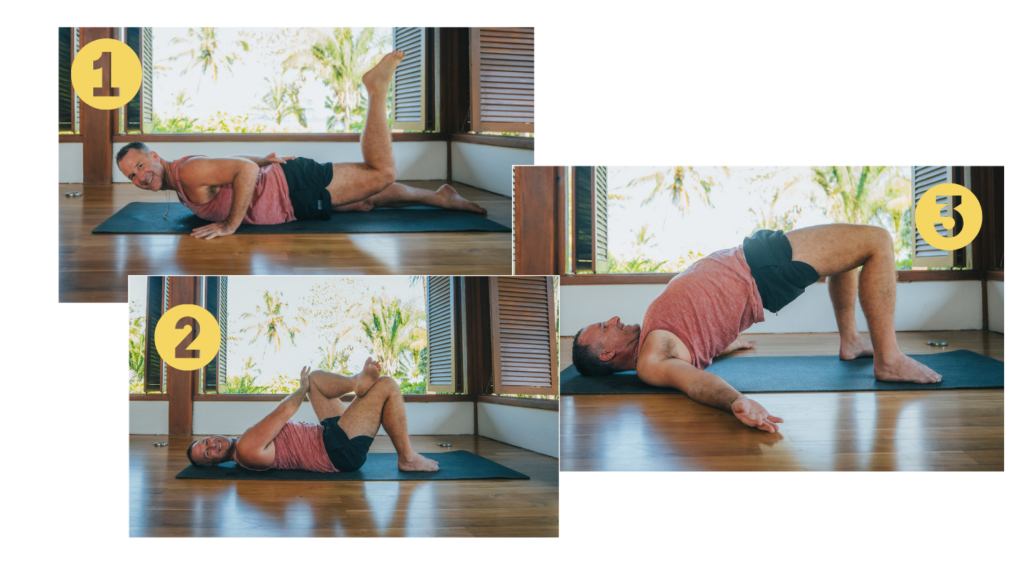
Here are three activations I use with almost every student who comes to me with tight, unstable hips.
1. Glute Activation
Lie on your stomach and bend one knee. Lift that thigh a small amount off the ground using only the glute muscle, not momentum. Hold for six seconds, release, and repeat six times. This is a small movement. It’s supposed to be. You’re not trying to lift high, you’re trying to teach the muscle to fire on command again.
2. Hip Flexor Activation
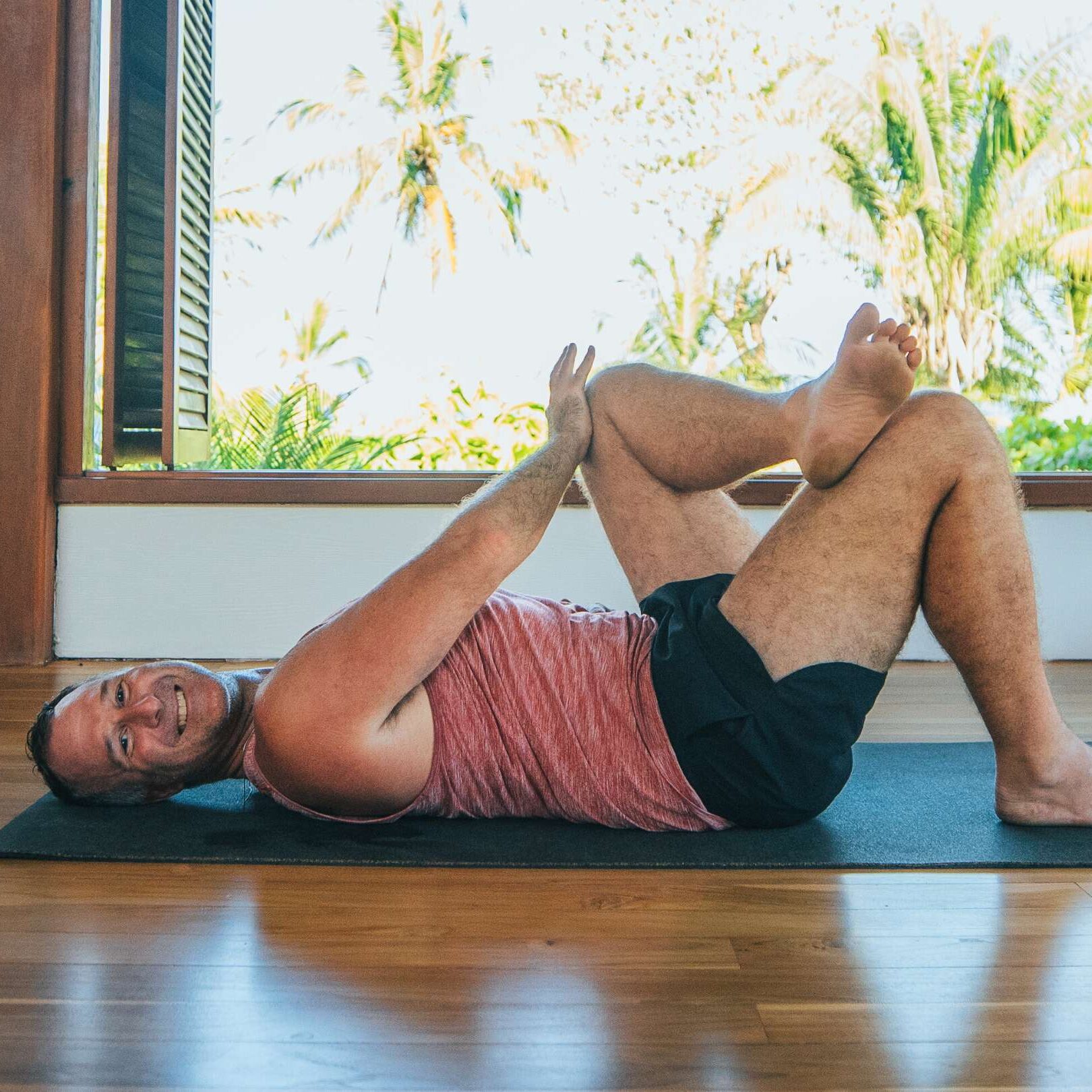
Lie on your back with one knee bent. Press that knee into your hand while your hand pushes back with equal resistance, so nothing actually moves. Hold six seconds, release, repeat six times on both sides. This wakes up the psoas, one of the most commonly underactive muscles I see in people with chronic hip and lower back pain.
3. Bridge Pose, Done Right
Lie on your back, knees bent, feet flat on the floor. Squeeze your glutes first, then lift your hips. The order matters. If you lift before you squeeze, you’re just using momentum. Hold six seconds at the top, lower slowly, repeat six times.
None of this feels as instantly satisfying as sinking into pigeon pose. But it changes the tightness at its source instead of numbing it for twenty minutes.
How Long Before You Notice a Difference
People often ask me how quickly this actually changes anything, since a deep pigeon pose stretch gives you a feeling of relief in under a minute.
Activation work is slower to feel dramatic, but it compounds. Most people notice their hips feeling more stable, not just looser, within one to two weeks of doing these three activations daily. The tightness that used to return within hours of stretching starts taking longer to come back, and eventually stops showing up in the same way at all.
This is the trade-off nobody mentions when they hand you a hip opener sequence. Stretching gives you a fast, temporary result. Activation gives you a slower, lasting one. If you’ve been chasing the fast version for years and your hips are no better off than when you started, that’s not a sign you need to stretch harder. It’s a sign the approach itself was never going to get you there.
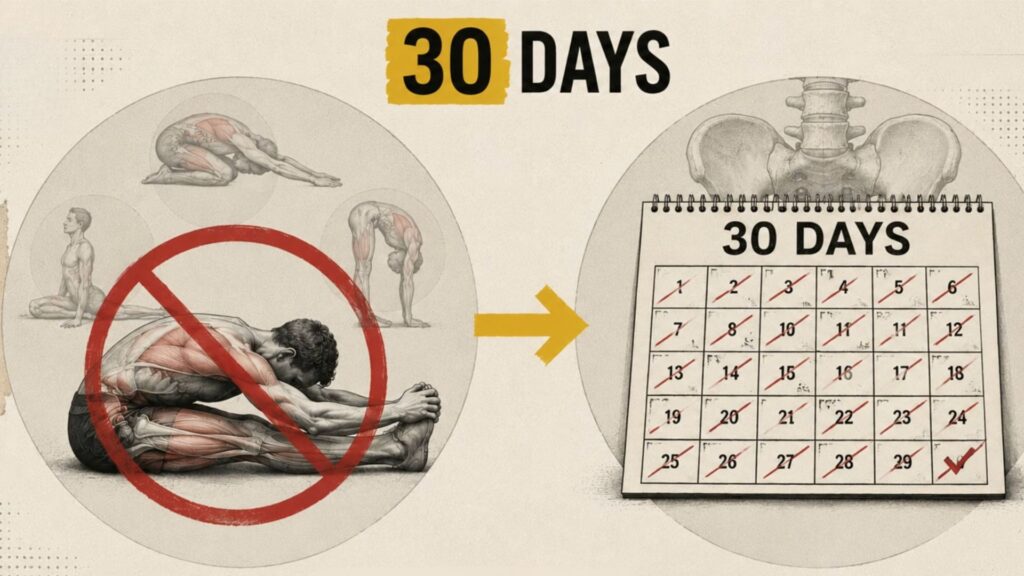
I recommend to my students to commit to a 30-day AYAMA practice. After a month of consistent muscle activations, I guarantee you’ll feel very different in your body!
Why Most Teachers Never Learned This
This obsession with opening the hips has almost nothing to do with yoga itself. It has everything to do with what happens when anatomy gets left out of teacher training.
Most 200-hour programs don’t ask why pigeon pose is prescribed in the first place. They don’t teach what the glutes are actually doing when you stretch them past their active range. They don’t give teachers the tools to understand their own bodies, or their students’ bodies, at this level. Most teachers genuinely don’t know whether pigeon pose is bad for you or not, because nobody taught them how to evaluate that question in the first place.
This is exactly the anatomy I teach at my immersion at Blue Osa in Costa Rica. What I find, consistently, with almost everyone who comes through, is that about 80 percent of what we cover together was never taught in their previous training. Not because their teachers were bad people. Because the standard 200-hour training simply doesn’t go here.
Common Questions About Pigeon Pose and Hip Pain
Is pigeon pose bad for you?
For most people who already deal with hip or lower back pain, yes, more often than not. Pigeon pose overstretches the glutes and hip rotators past their active range, which tends to leave the hips less stable rather than more open in any way that lasts. That doesn’t mean the pose is inherently dangerous for every single person, but if tightness or pain keeps returning after you practice it, that’s a sign it’s working against you, not for you.
Is pigeon pose bad for your hips?
Not necessarily bad in every case, but if you already deal with hip or lower back pain, the answer is very often yes. Overstretching the glutes and hip rotators past their active range tends to leave the hips less stable, not more open in any way that lasts.
Is pigeon pose bad for everyone?
Not necessarily bad for everyone in every context, but it’s overused and often misunderstood. If your hips already feel unstable, achy, or chronically tight, pigeon pose is very likely making that worse rather than better, even though it feels good in the moment.
What should I do instead of pigeon pose for tight hips?
Focus on activation rather than stretching. Glute activation, hip flexor activation, and bridge pose done with a deliberate squeeze before the lift will do more for lasting hip stability than any amount of passive stretching.
Why does pigeon pose feel good if it’s not actually helping?
Passive stretching produces a temporary release of tension, which feels good immediately. But it also reduces the muscle’s ability to contract afterward, which is why the tightness so often returns within hours. Feeling good in the moment and actually fixing the problem are two different things.
How do I know if my hips are actually tight, or just unstable?
Compare how far your knee drops to the side under your own muscular control versus how far it drops when you fully relax. A large gap between the two usually points to instability, not tightness, which means activation work will help more than stretching.
Want to be guided through all of what I covered in this blog? Watch my YouTube video now:
If you want to start working with your body instead of against it, the AYAMA Starter Kit is a free place to begin. And if you’re a teacher who’s had a feeling there’s something important you were never taught, that’s exactly who the AYAMA Immersion at Blue Osa is for.
Have you noticed pigeon pose giving you relief that never lasts? I’d love to hear about it. And if you’re still asking yourself whether pigeon pose is bad for you, your own body has probably already answered that question. It’s just a matter of listening to it.
About The Author, Yogi Aaron
Yogi Aaron is the founder and creator of Applied Yoga Anatomy + Muscle Activation™ (AYAMA), a revolutionary methodology
that challenges conventional approaches to yoga. Using a science-backed approach, he prioritizes muscle activation over traditional stretching.
With over three decades of dedicated study, mentorship, and hands-on experience, he has established himself as a leading expert in yoga therapy, alignment, and pain-free movement.
As owner and operator of Blue Osa Yoga Retreat + Spa in Costa Rica, Yogi Aaron leads transformative programs that combine his expertise in yoga instruction, retreat facilitation, and wellness business operations. His work spans both in-person immersive experiences and digital education through The Yogi Club online platform and the AYAMA™ Certification Program.
Yogi Aaron’s teaching methodology represents a paradigm shift in modern yoga practice. AYAMA focuses on activating and engaging muscles to enhance range of motion, build strength, improve stability, and optimize alignment—while reducing pain and injury risk. This evidence-based approach has positioned him as a thought leader challenging the status quo in the yoga community.
His mission extends beyond the mat: to liberate individuals from chronic pain and guide them toward discovering yoga’s authentic purpose through intelligent, body-informed practice.
Learn more about training opportunities with Yogi Aaron at Blue Osa Yoga Retreat + Spa.
Check out these other popular posts!