Pigeon Pose: Why This “Hip Opener” May Be Hurting You
For years, pigeon pose has been treated as the ultimate hip opener—the go-to shape for releasing tension, loosening tight hips, and even letting go of stored emotion. But according to Yogi Aaron, who has taught yoga for more than three decades, this widely loved pose may be doing the opposite of what most practitioners believe. In fact, he argues that teaching pigeon pose as a hip opener is one of the most persistent misunderstandings in modern yoga.
This isn’t about fear-mongering or throwing out your practice. It’s about understanding what actually happens in your body when you sink into that deep stretch—and why “feeling good” and “doing good” aren’t always the same thing.
Try This Simple Test Before You Read On
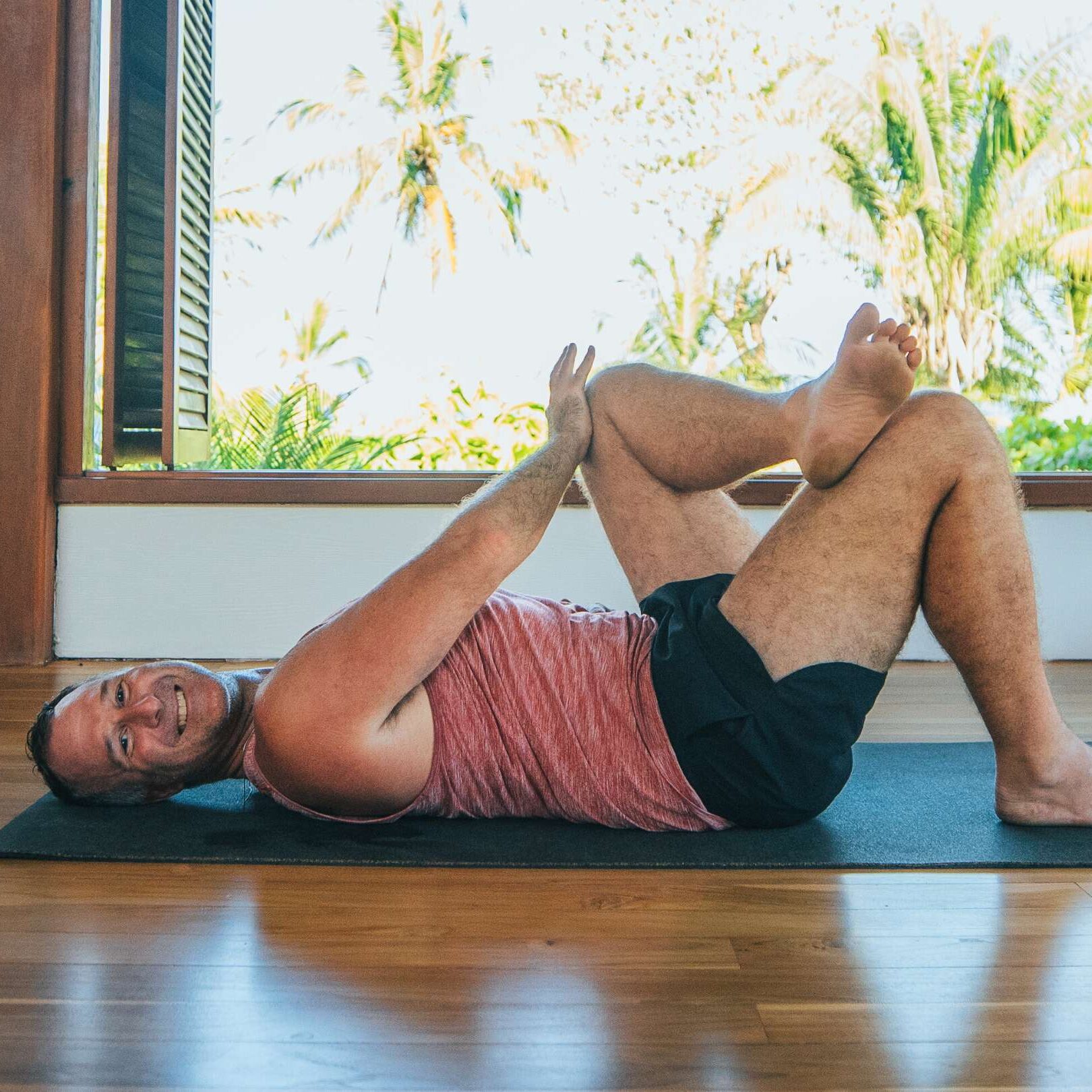
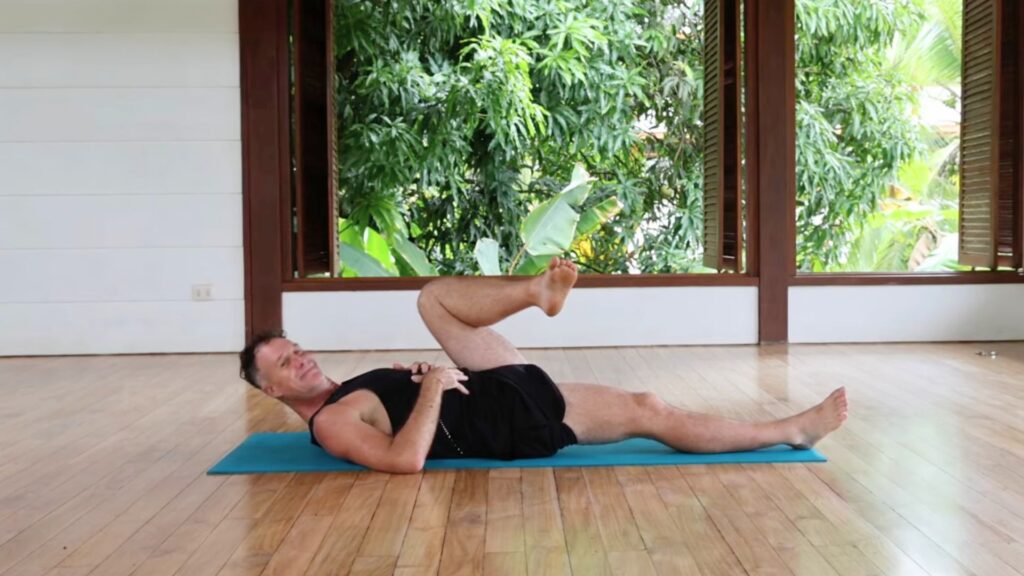
Before diving into the anatomy, Yogi Aaron suggests a quick experiment. Lie on your back. Without using your hands, try to draw one leg into the shape of pigeon pose using only your muscles.
Most people get maybe a third of the way there. If you’re especially mobile, perhaps halfway. That gap—between where your leg naturally goes and where full pigeon pose puts it—matters. The range you can reach on your own is your active range of motion: the range your muscles can actually control.
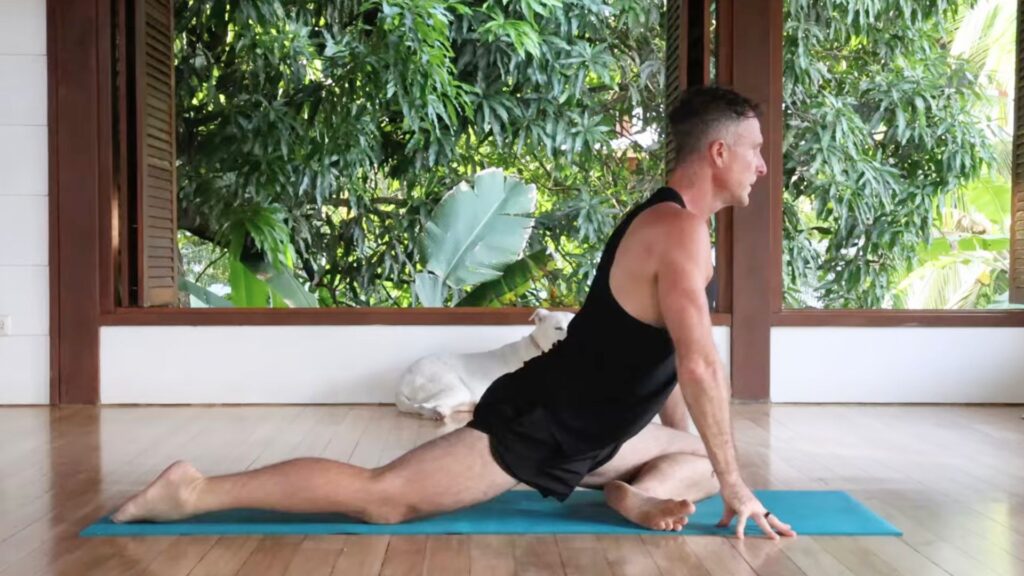
Now picture full pigeon pose. The leg is all the way to the floor, and your body weight presses down on top of it. You’re no longer using your muscles to get there. You’re using gravity and body weight to force the joint into a position it can’t reach on its own.
Why Pigeon Pose Isn’t the Hip Opener You Think It Is
Here’s the question Yogi Aaron wants every practitioner to sit with: what happens to a muscle when you force it into a range of motion it can’t actively reach?
According to the neuromuscular principles he teaches, the answer is that the muscle shuts down. The neurological signal between the brain and the muscle gets inhibited, and the muscle loses its ability to do its job. That’s not an opinion—it’s how the neuromuscular system responds to being stretched past what it can actively control.
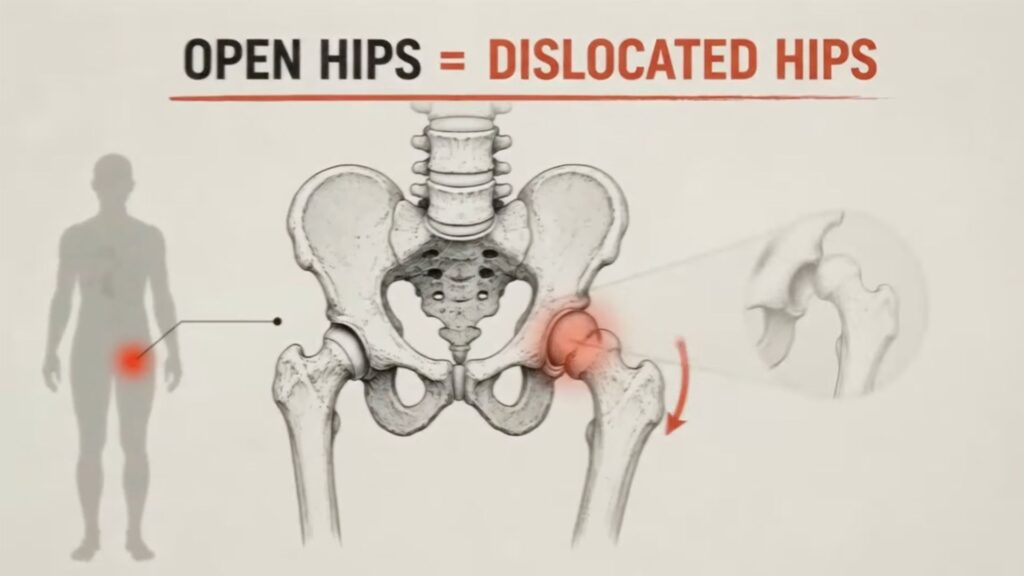
So when a teacher cues you to “open your hips,” it’s worth asking what that phrase actually means. Open them for what? Biomechanically, sinking into pigeon pose overstretches the glutes and the deep hip rotators, leaving the pelvis less supported rather than more.
What Pigeon Pose Does to Your Glutes
This is where Yogi Aaron believes pigeon pose does the most damage.
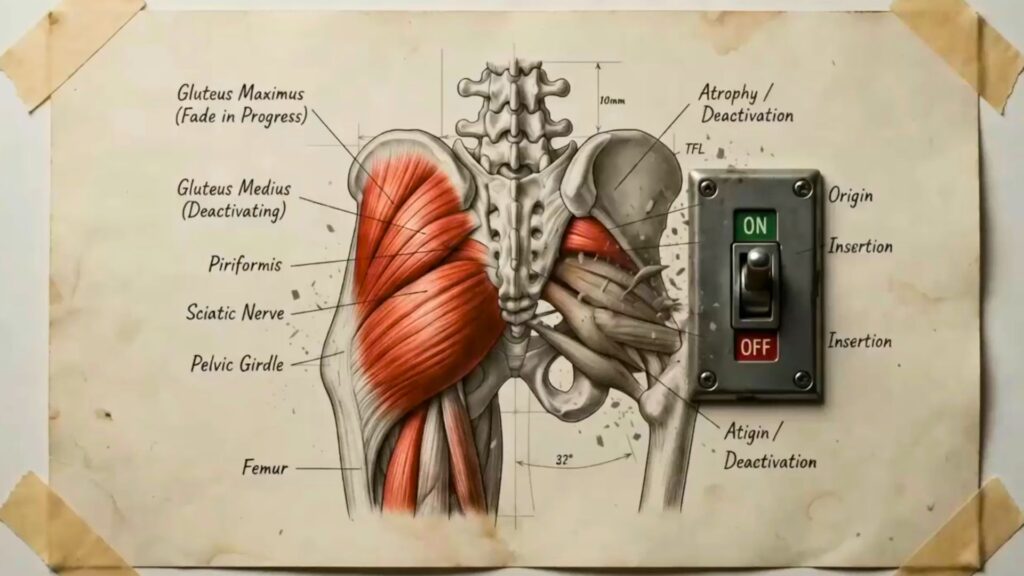
Your glutes are the shock absorbers and suspension system of your body. They stabilize the pelvis, protect the lower back, and absorb force every time you walk, stand, or move. They are among the most important stabilizing muscles you have.
When you stretch the glutes—which is exactly what pigeon pose does—you effectively tell those muscles to stand down. Every time a muscle is stretched past its active range, it switches off. Do that repeatedly to your primary stabilizers, and you leave your entire pelvic structure vulnerable.
Why “It Feels Good” Can Be Misleading
The most common objection Yogi Aaron hears is simple: but pigeon pose feels amazing.
He doesn’t dispute that. A passive stretch does create temporary relief—the tension dissipates for a few minutes and you feel looser. But feeling good in the moment isn’t the same as doing good for your body. As Yogi Aaron puts it, plenty of things feel good without being good for you.
What that passive stretch has actually done is reduce the muscle’s ability to contract. You’ve made it less stable, not more. And within hours—sometimes minutes—the tension returns, often stronger than before, because the underlying issue was never addressed. It was only masked.

A Real Example: Piriformis Pain That Wouldn’t Quit
Yogi Aaron describes a student who came to him with deep hip and piriformis pain—the kind that radiates down the leg. She’d been practicing pigeon pose every single day for months. It would feel good for a few minutes, then the pain would return. Every time.
Their approach was to stop pigeon pose entirely and begin activating the glutes and surrounding hip muscles instead. Over time, the pain didn’t just improve—it resolved completely. Not because she stretched harder, but because she stopped masking the problem and started addressing its root cause.
What to Do Instead of Pigeon Pose
The alternative Yogi Aaron teaches isn’t more stretching—it’s activation. Instead of switching off the muscles that stabilize your hips, the goal is to switch them on and rebuild the connection between your brain and those muscles.
This is the foundation of his AYAMA™ Method (Applied Yoga Anatomy + Muscle Activation), an approach that focuses on strengthening and activating muscles through their active range rather than forcing them past it. When the glutes and deep hip muscles are working properly, the “tightness” people chase in pigeon pose often takes care of itself—because the body finally feels stable enough to let go.
The Anatomy Most Yoga Trainings Skip
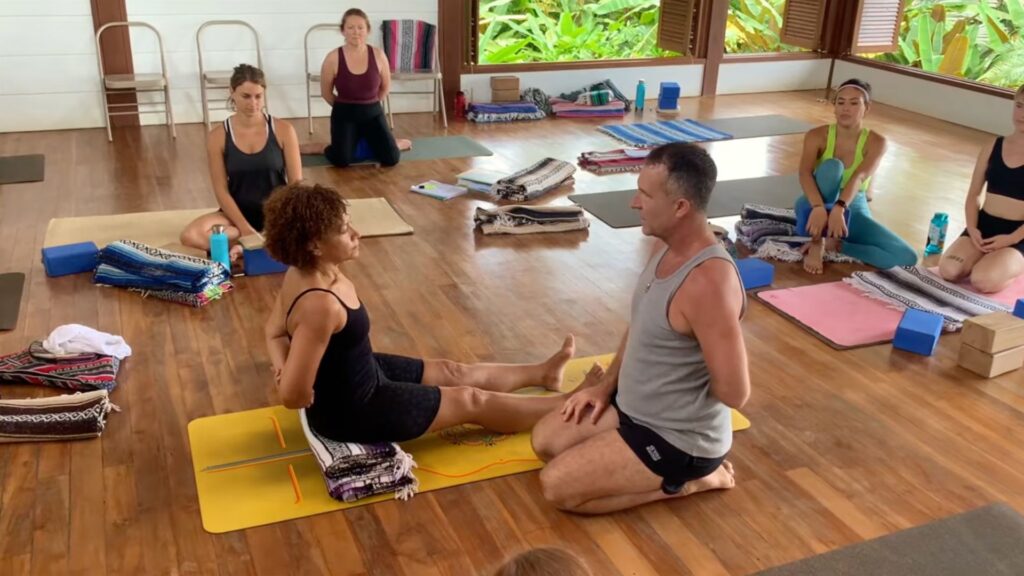
Part of why the pigeon pose myth persists, Yogi Aaron says, comes down to how teachers are trained. He estimates that roughly 80% of what he covers in his immersion at Blue Osa in Costa Rica was never taught in his students’ previous trainings—not because their teachers were bad, but because the standard 200-hour curriculum simply doesn’t go this deep.
Most trainings don’t ask why pigeon pose is prescribed, what the glutes are actually doing when you stretch them, or how to read your own body at this level. For practitioners who sense something is missing—and for certified teachers who suspect there’s an important gap in what they learned—this is exactly the kind of anatomy worth exploring.
Where This Understanding Comes From
Yogi Aaron didn’t learn any of this from a textbook. He learned it the hard way. After 25 years of daily practice, he ended up in a hospital emergency room being told he needed a spinal fusion in his lower back. His yoga practice—done the way he’d been taught—had contributed to the injury.
That experience reshaped everything about how he understands and teaches yoga today.
The Takeaway
Pigeon pose isn’t inherently evil, and this isn’t about shaming anyone who loves it. It’s an invitation to get curious about what’s actually happening beneath the sensation—and to ask whether the pose is truly opening your hips or quietly switching off the muscles that hold you together.
About The Author, Yogi Aaron
Yogi Aaron is the founder and creator of Applied Yoga Anatomy + Muscle Activation™ (AYAMA), a revolutionary methodology
that challenges conventional approaches to yoga. Using a science-backed approach, he prioritizes muscle activation over traditional stretching.
With over three decades of dedicated study, mentorship, and hands-on experience, he has established himself as a leading expert in yoga therapy, alignment, and pain-free movement.
As owner and operator of Blue Osa Yoga Retreat + Spa in Costa Rica, Yogi Aaron leads transformative programs that combine his expertise in yoga instruction, retreat facilitation, and wellness business operations. His work spans both in-person immersive experiences and digital education through The Yogi Club online platform and the AYAMA™ Certification Program.
Yogi Aaron’s teaching methodology represents a paradigm shift in modern yoga practice. AYAMA focuses on activating and engaging muscles to enhance range of motion, build strength, improve stability, and optimize alignment—while reducing pain and injury risk. This evidence-based approach has positioned him as a thought leader challenging the status quo in the yoga community.
His mission extends beyond the mat: to liberate individuals from chronic pain and guide them toward discovering yoga’s authentic purpose through intelligent, body-informed practice.
Learn more about training opportunities with Yogi Aaron at Blue Osa Yoga Retreat + Spa.
Check out these other popular posts!