Stop Stretching for 30 Days: The Surprising Results
What happens when a yoga teacher with thirty years of experience decides to stop stretching entirely? Yogi Aaron ran exactly that experiment on himself — no held stretches, no pigeon pose, no seated forward folds — and replaced all of it with something else. The results were different enough from three decades of practice that they became the foundation of the method he teaches today.
This article breaks down why he made that choice, what changed in his body, and how to run the same thirty-day experiment at home. After reading, watch the full video on YouTube.
Thirty Years of Flexibility and Chronic Pain
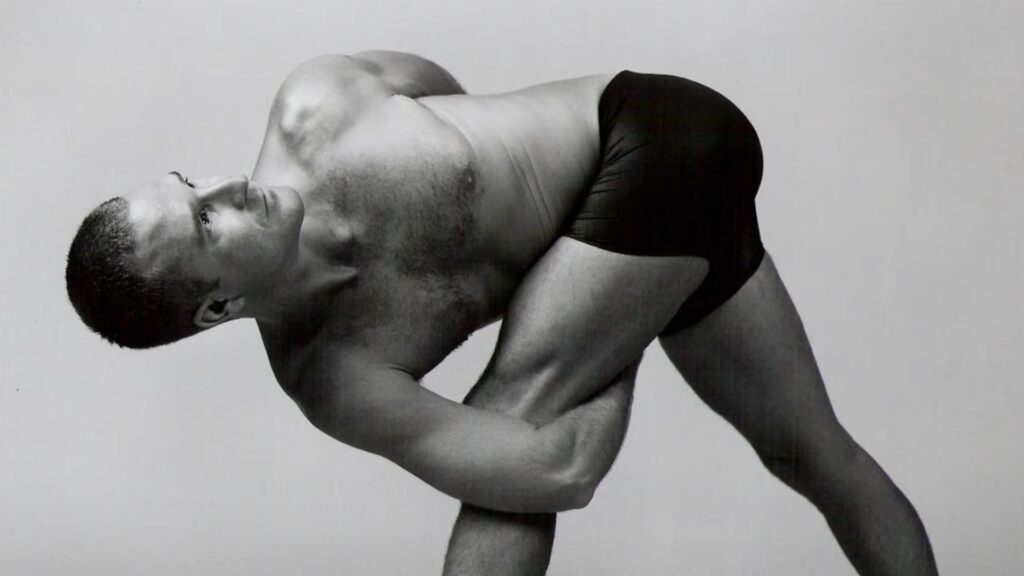
For most of his early practice, Yogi Aaron did everything a dedicated yogi is supposed to do. He stretched daily. He was visibly flexible — the kind of flexible that other students comment on after class.
He was also in constant pain.
Hip pain. Lower back pain. Shoulder problems that never resolved no matter how much he worked on them. Hiking, something he genuinely loved, became impossible by his early thirties. His body simply couldn’t tolerate it anymore.
The frustrating part was the pattern beneath it: the more he stretched to fix the problem, the worse it became.
The Moment That Made Him Stop Stretching
At forty-five, he was sitting in an orthopedic surgeon’s office being told he needed spinal fusion surgery.
Twenty-plus years of dedicated practice. Twenty-plus years of daily stretching. And the outcome was a recommendation for back surgery.
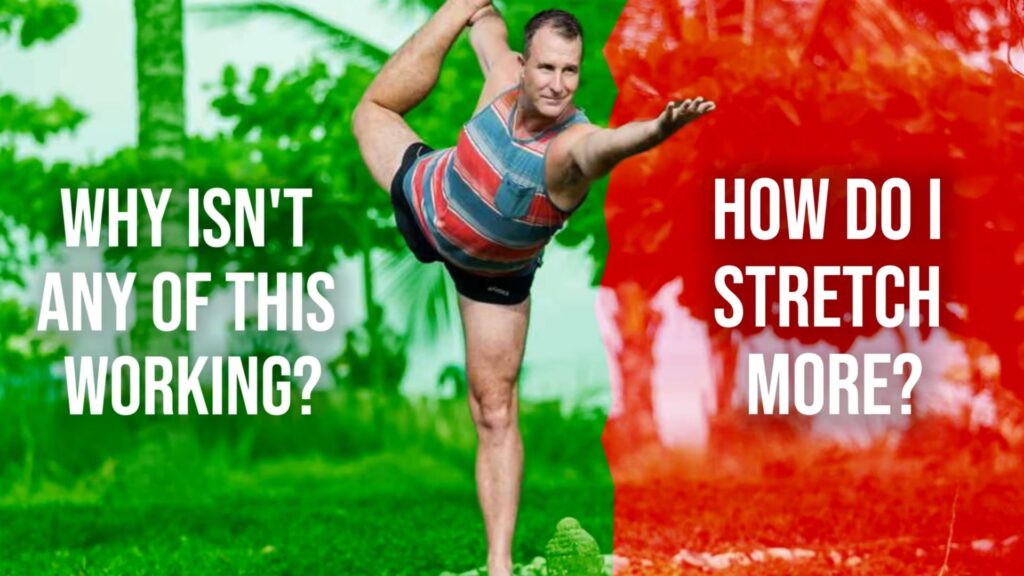
That was the point where the question changed. Instead of asking how do I stretch more, he started asking why isn’t any of this working?
What Passive Stretching Actually Does to a Muscle
The answer he arrived at reframes most of what a typical yoga class teaches.
Passive stretching — the long-held, relax-into-it lengthening that sits at the heart of nearly every yoga class — appears to shut muscles down neurologically. When a muscle is repeatedly lengthened under stress, it loses some of its capacity to contract properly. The signal between brain and muscle gets disrupted.
And here’s the consequence that matters most: a muscle that can’t contract can’t stabilize the joint it’s supposed to protect.
Read that again in the context of chronic joint pain. Unstable joints produce pain. Muscles that won’t fire produce unstable joints. Passive stretching, done relentlessly, contributes to muscles that won’t fire.
The conclusion Yogi Aaron reached was uncomfortable but clarifying: he wasn’t in pain despite his yoga practice. He was in pain because of it.

Why “Stop Stretching” Is Only Half the Equation
This is the part that gets misunderstood most often, so it’s worth being direct about it.
Choosing to stop stretching is fifty percent of the approach. On its own, it does very little. All it does is remove something that was working against you.
The other fifty percent — the half that actually produces change — is muscle activation: specific exercises designed to get neurologically weak muscles contracting again and to rebuild the brain-to-muscle connection.
It isn’t enough to stop doing the thing that hurts you. You have to start doing the thing that heals you.
Those two halves together are what Yogi Aaron named AYAMA™ — Applied Yoga Anatomy + Muscle Activation — the method he developed over years of study, experimentation, and work with students.
What Changed After Thirty Days
The pain didn’t disappear overnight. It receded steadily and consistently, which is a meaningfully different experience from the temporary relief a good stretch provides. For the first time in years, the trend line was pointing the right direction. Long-standing shoulder issues began to settle.
Then something unexpected happened: he got stronger. Not just less painful — measurably stronger. He began lifting more weight than at any previous point in his life.
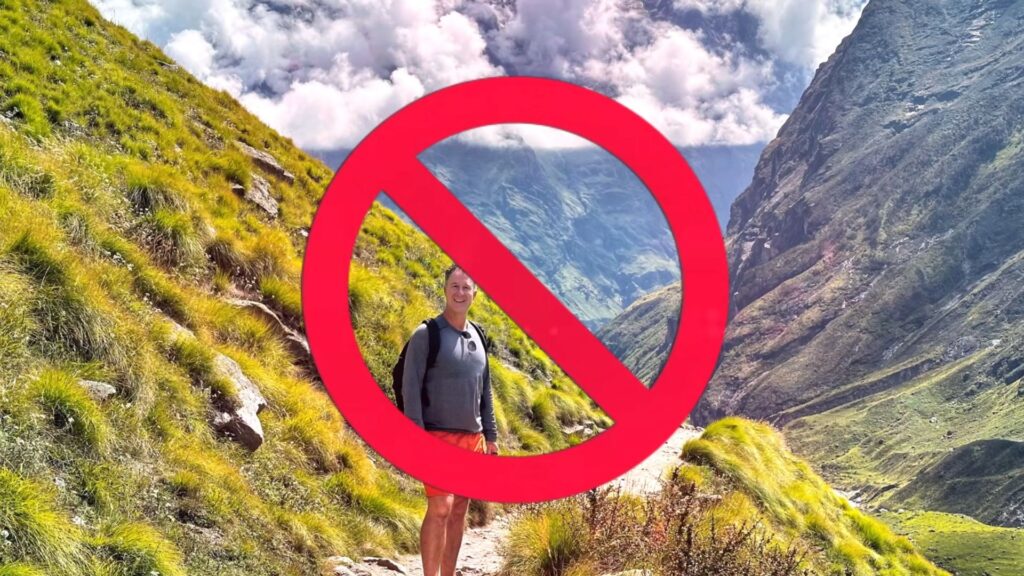
The moment that stands out most, though, involves the trails. He’d given up hiking at thirty because of knee pain and a lower back that stayed sore and tight for days afterward. Fifteen years passed without it. After he stopped stretching and committed to muscle activation, he went back — and his body handled it.
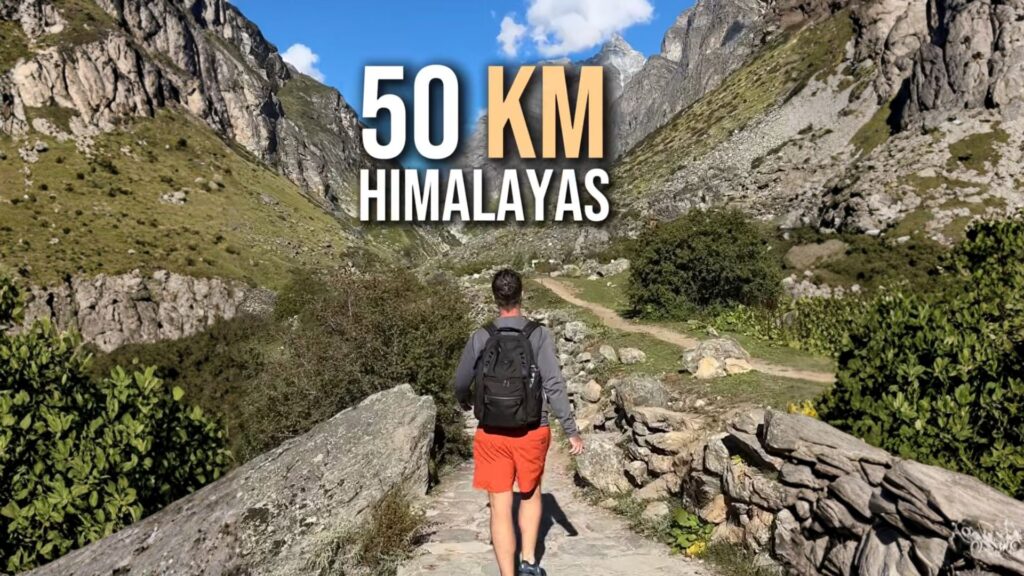
He has since hiked fifty kilometres through the Himalayas, at an age when most people are being advised to slow down and be careful.
The 30-Day Stop Stretching Experiment
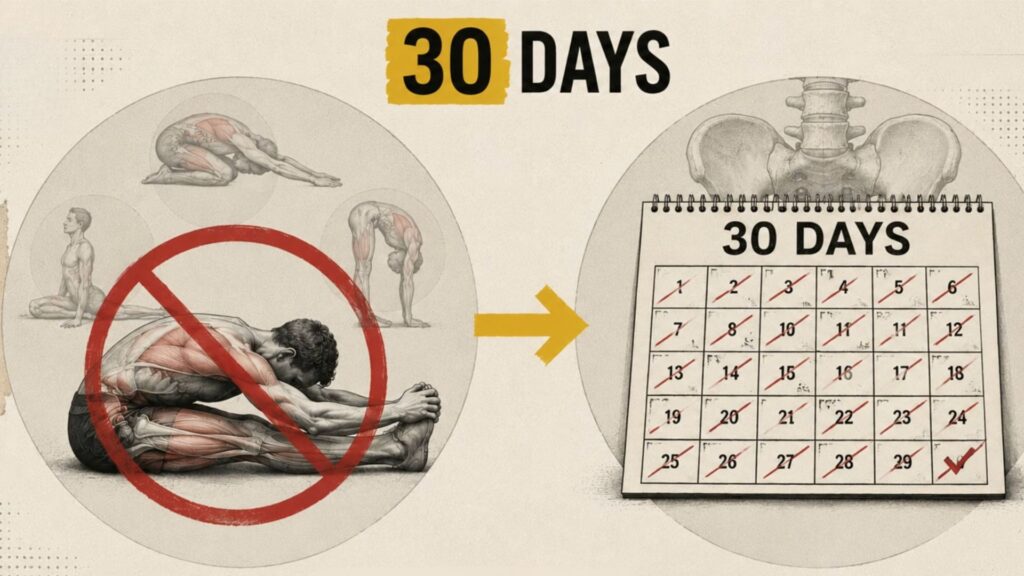
Here is the protocol, kept deliberately simple. Two rules, ten minutes a day, no equipment.
Rule One: Eliminate All Passive Stretching
For thirty days, no held stretches of any kind. That specifically includes:
- Pigeon pose
- Seated forward folds
- Child’s pose
- Any posture where you settle in and wait for the muscle to release
No exceptions, no “just a quick one.” The point of an experiment is a clean variable.
Rule Two: Add Three Muscle Activation Exercises Daily
Each exercise follows the same protocol: hold for six seconds, repeat six times.
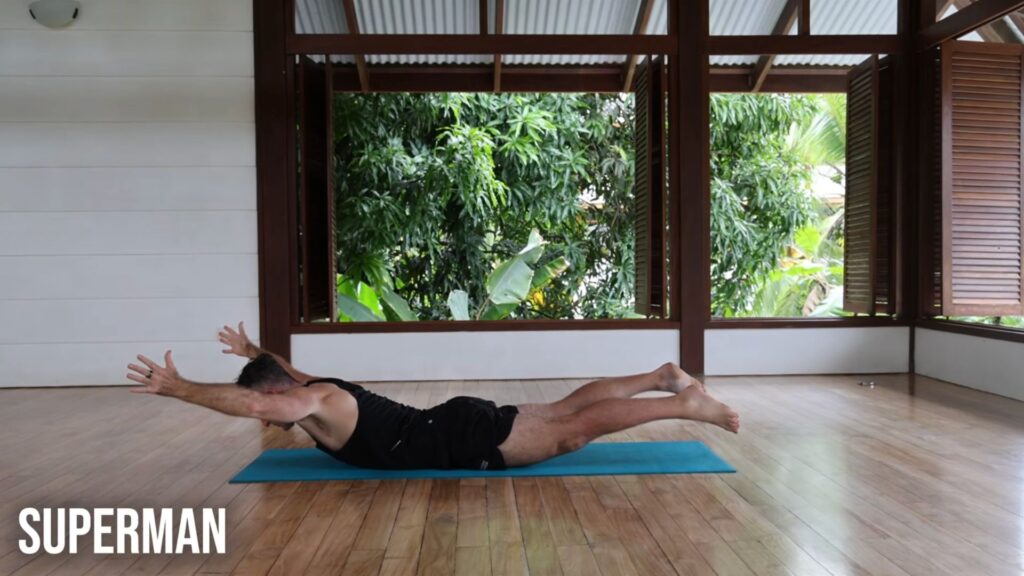
1. Superman:
Lie face down with your arms extended in front of you. Lift your arms, legs, and chest off the ground, engaging the muscles along your back. Hold six seconds. Repeat six times.
2. Bridge Pose:
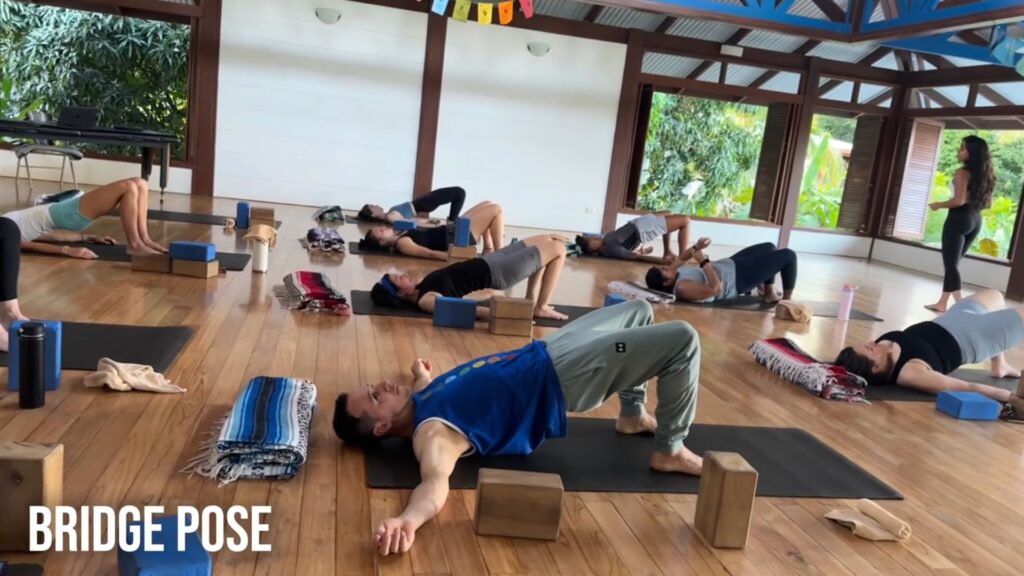
Lie on your back with knees bent and feet flat on the floor. Press through your feet and lift your hips toward the ceiling, squeezing your glutes hard at the top — the squeeze is the entire point, not the height of the lift. Hold six seconds. Repeat six times.
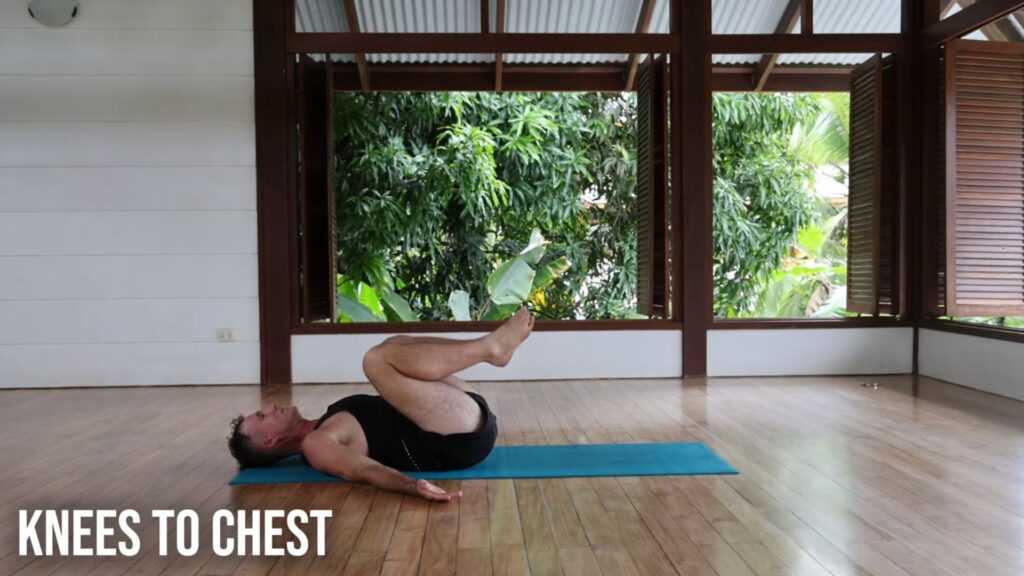
3. Knees to Chest:
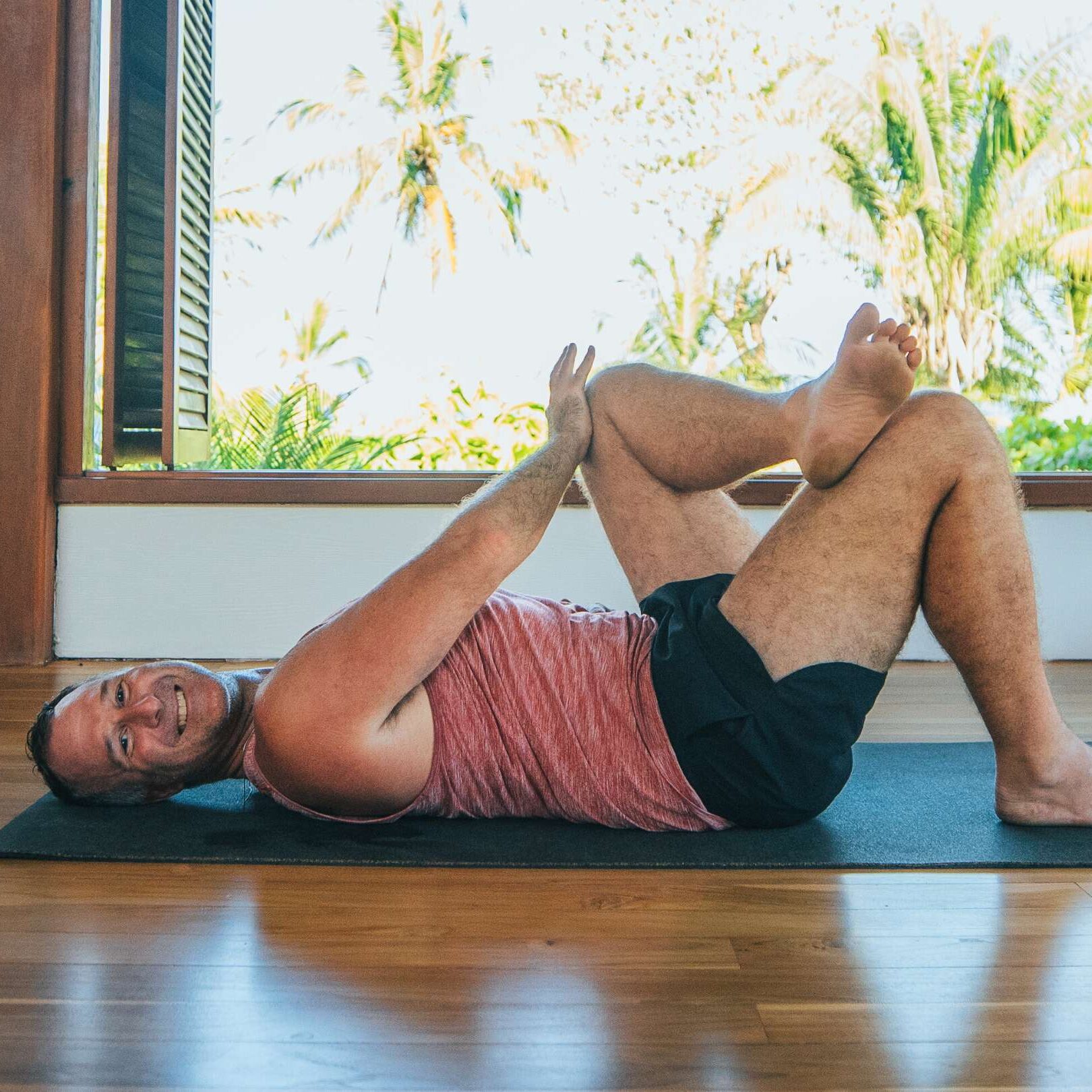
Lie on your back and draw your knees toward your chest with your arms out to the sides. Actively squeeze your knees into your chest. Hold six seconds. Repeat six times.
Why Six Seconds and Six Repetitions?
The numbers aren’t arbitrary — they’re one of the core AYAMA™ protocols.
Six seconds is roughly the minimum a muscle needs to reestablish a proper neurological contraction. Hold for less, and the signal doesn’t fully register. Hold significantly longer, and you start stressing the muscle rather than activating it. Six seconds sits in the useful middle.
Six repetitions reinforce the pattern without tipping into fatigue.
How to Run the Experiment
You can start with nothing but the three exercises above. Same rules: six seconds, six repetitions, every day, thirty days, zero passive stretching.
If you want the full foundational sequence rather than just three movements, the free AYAMA™ Starter Kit lays the whole practice out step by step, so you know exactly what to do each day. It’s essentially the same system taught at Blue Osa, packaged for home practice.
Download the free AYAMA™ Starter Kit →
What to Expect — and What Not To
Thirty days is long enough to notice a direction, not long enough to finish rebuilding a body that’s been compensating for years. Most people report changes in how joints feel before they see changes in what they can do.
It’s also worth saying plainly: this is one person’s experiment and one method’s framework, not medical advice. Anyone managing an acute injury, a diagnosed condition, or a surgical recommendation should work with a qualified healthcare provider before changing what they’re doing.
Ready to Test It?
The premise is straightforward. If stretching were the answer to tightness and pain, thirty years of daily stretching would have solved it. It didn’t — and understanding why is what makes the alternative worth trying.
Stop stretching for thirty days. Activate instead. Then pay close attention to what your body tells you.
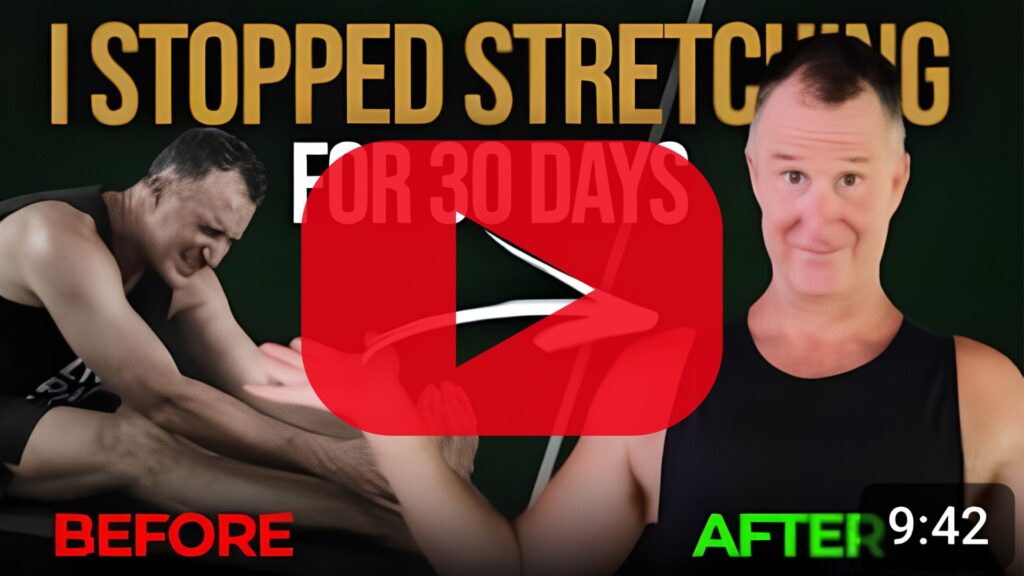
Watch the full video:
Ready to become pain-free & deepen your practice of yoga? Explore the immersive yoga teacher training at Blue Osa in Costa Rica, where stability comes first—always.
About The Author, Yogi Aaron
Yogi Aaron is the founder and creator of Applied Yoga Anatomy + Muscle Activation™ (AYAMA), a revolutionary methodology
that challenges conventional approaches to yoga. Using a science-backed approach, he prioritizes muscle activation over traditional stretching.
With over three decades of dedicated study, mentorship, and hands-on experience, he has established himself as a leading expert in yoga therapy, alignment, and pain-free movement.
As owner and operator of Blue Osa Yoga Retreat + Spa in Costa Rica, Yogi Aaron leads transformative programs that combine his expertise in yoga instruction, retreat facilitation, and wellness business operations. His work spans both in-person immersive experiences and digital education through The Yogi Club online platform and the AYAMA™ Certification Program.
Yogi Aaron’s teaching methodology represents a paradigm shift in modern yoga practice. AYAMA focuses on activating and engaging muscles to enhance range of motion, build strength, improve stability, and optimize alignment—while reducing pain and injury risk. This evidence-based approach has positioned him as a thought leader challenging the status quo in the yoga community.
His mission extends beyond the mat: to liberate individuals from chronic pain and guide them toward discovering yoga’s authentic purpose through intelligent, body-informed practice.
Learn more about training opportunities with Yogi Aaron at Blue Osa Yoga Retreat + Spa.
Check out these other popular posts!