Yoga for Energy: Why Activation Beats Stretching for Real Vitality

You’ve been told that stretching gives you energy. That loosening tight muscles will somehow revitalize your body and make you feel alive. But here’s the truth most yoga teachers won’t tell you: your tight muscles aren’t the problem—they’re protecting weak, unstable muscles underneath.
This is the fundamental principle behind Applied Yoga Anatomy + Muscle Activation™ (AYAMA), and it’s why this approach to yoga for energy works differently than anything you’ve tried before. Instead of passively stretching your way to exhaustion, you’re going to activate, engage, and strengthen your body into genuine, lasting energy.
The Problem with Traditional “Energizing Yoga”
Most morning yoga for energy practices focus on deep stretches and long holds in various yoga poses, believing that releasing tension creates vitality.
The result?
You might feel temporarily loose, but within hours, you’re back to feeling sluggish, tight, and depleted.
Why?
Because stretching weakens already compromised muscles. When you force a stretch, you’re essentially telling your nervous system:
“Make this muscle longer and less stable.” Your body responds by tightening up again—this time even more—to protect itself from injury.
Real energy comes from strength, stability, and proper muscle activation.
How Muscle Activation Creates Energy
Think about the last time you felt truly energized. Were you collapsed on a couch in a deep stretch? Or were you actively engaged—hiking, playing with your kids, accomplishing something meaningful?
Energy isn’t passive. It’s active.
When you properly activate your muscles through yoga poses for energy, several things happen simultaneously:
- Your nervous system wakes up – Active muscle engagement sends signals throughout your entire body, activating your sympathetic nervous system in a controlled, beneficial way
- Blood flow increases – Muscle contractions pump blood more efficiently than passive stretches ever could
- Weak muscles get stronger – Instead of compensating with tightness, your body develops real stability
- Your posture improves – Better muscle activation means your body can hold itself upright without effort
- You become pain-free – Strong, stable muscles don’t need to protect themselves through chronic tension
This is the core of the AYAMA methodology—and it’s what makes this energizing yoga practice so effective.

The 10-Minute Yoga for Energy Practice
This power yoga practice is designed to activate every major muscle group in your body in just ten minutes. You can do it first thing in the morning, during a midday slump, or anytime you need to boost energy and reclaim your vitality.
Starting with Intention
We begin standing at the front of your mat, feet hip-distance apart. But this isn’t passive standing—already, you’re engaging. Feel your feet grounding into the earth. Notice your heels directly under your hips. This is active awareness, not stretching.
Side Body Activation
The practice begins with lateral movements—arms reaching overhead, then side bending right and left. But here’s where it differs from traditional yoga: you’re crunching your obliques, not just leaning over.
Feel the right side of your obliques contracting as you move right. Then the left side as you move left. This isn’t about getting a “deeper stretch”—it’s about feeling those muscles work, engage, fire up. That activation sends energy coursing through your entire torso.

Chair Pose: The Energy Generator
Chair pose (Utkatasana) is where many people collapse into their joints, hanging on their ligaments. Not in this yoga for energy practice.
As you sit back into this fundamental yoga pose, you’re reaching up with your heart and arms, taking your biceps behind your ears. Feel every muscle in your legs firing—quads, glutes, hamstrings working together. Your core squeezes in to stabilize. Nothing is passive. Everything is engaged.
Then we add rotation, turning left and right while keeping the hips square. This isn’t just a twist—it’s an activation of your deep core stabilizers, the muscles that give you real energy because they hold your spine safe and strong.

High Lunge: Building Strength and Stamina
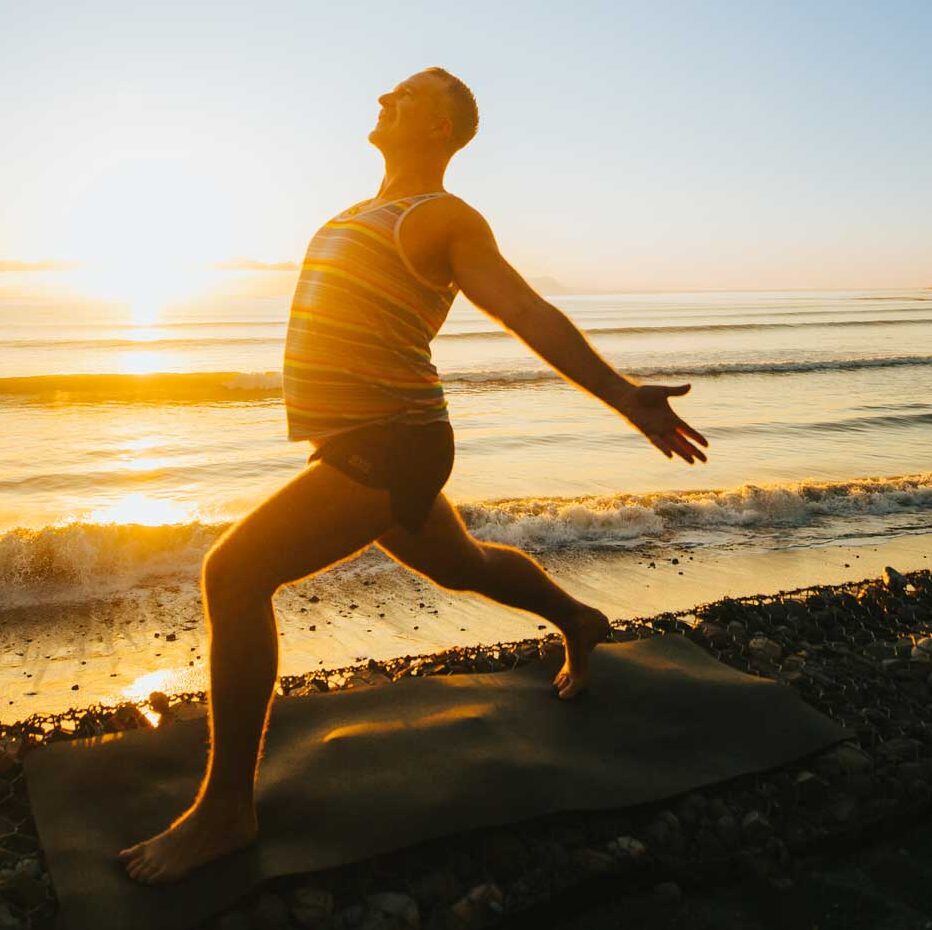
The high lunge variations in this sequence aren’t about achieving a “deeper hip opener.” They’re about building strength in vulnerable positions.
As you step back into this powerful position, you’re not sinking into the hip flexor. You’re lifting up through the heart, engaging the front leg powerfully, pressing back through the heel of the back leg. Arms extend to the sides with palms facing up—and here’s a key AYAMA principle: you’re squeezing your middle traps.
Why? Because when your middle traps engage, your pecs have to soften. This isn’t stretching your chest; it’s creating space through opposing muscle activation. The result? Your chest opens naturally, your breath deepens, and energy flows without forcing anything.

The Power of Plank and Downward Dog
The vinyasa flow through plank, upward dog, and downward dog isn’t cardio for the sake of cardio. Each yoga pose is an opportunity to activate specific muscle groups:
- Plank: Core muscles squeezing toward the midline, not just hanging in your shoulders
- Upward Dog: Legs engaging fully, chest pulling forward through muscle activation, not passive backbending
- Downward Dog: Entire posterior chain working together—hamstrings, glutes, back muscles all firing
This is the difference between yoga for energy that truly works versus practices that just wear you out. Every movement serves a purpose.
Side Plank Variations: Activate your Oblique Muscles
The side plank work in this practice specifically targets your lateral obliques—the muscles that stabilize your spine from the sides. You’re not just holding a position; you’re lifting and lowering your hips, creating dynamic strength.
This is how yoga to boost energy actually works: through movement that challenges your muscles to get stronger, not longer.

The Revolutionary Approach: Stop Stretching, Start Activating
After 30 years of working with bodies through Muscle Activation Techniques (MAT™) and developing AYAMA, I can tell you this with absolute certainty: the path to pain-free, energized living isn’t through more flexibility—it’s through proper strength and activation.
In our yoga teacher training programs, this is one of the hardest concepts for new teachers to grasp because it goes against everything traditional yoga has taught. But once they experience it—once they stop forcing stretches and start activating muscles in each asana—the transformation is undeniable.
Students who come to our programs at Blue Osa Yoga Retreat + Spa in Costa Rica often arrive exhausted from years of stretching, pushing, forcing their bodies into poses. Within days of applying AYAMA principles to their yoga for energy practices, they report:
- More energy throughout the day
- Reduction or elimination of chronic pain
- Better sleep quality
- Improved athletic performance
- A sense of genuine strength rather than just flexibility

Why This Morning Yoga for Energy Practice Works
Ten minutes might not seem like much, but when every moment is spent in purposeful muscle activation rather than passive stretching, the effects are profound and long-lasting.
This energizing yoga practice works because:
- It activates your entire body – From obliques to traps to deep core stabilizers
- It’s time-efficient – Maximum activation in minimum time
- It builds real strength – Not just temporary looseness
- It creates sustainable energy – Based on stability, not stress
- It’s pain-free – Because you’re strengthening, not straining
The Shavasana Difference
Even the closing shavasana (corpse pose) serves a purpose. After ten minutes of focused muscle activation, your nervous system needs a moment to integrate all that work. You’re not collapsing in exhaustion—you’re allowing your body to recalibrate at a higher level of function.
As you lie there for just one minute, scanning through your body from head to feet, you’re reinforcing the mind-muscle connection that makes this practice so powerful.

Understanding Key Poses for Energy
Each position in this yoga for energy sequence serves a specific purpose in building vitality through muscle activation:
Utkatasana (Chair Pose) – Activates the entire lower body and core, building heat and stamina
Virabhadrasana variations (Warrior poses/High Lunge) – Strengthens legs while opening the chest through trap engagement
Adho Mukha Svanasana (Downward-Facing Dog) – Activates the posterior chain while sending fresh blood to the brain
Urdhva Mukha Svanasana (Upward-Facing Dog) – Engages the legs and back muscles to create a sustainable backbend
Side Plank variations – Builds lateral stability through oblique activation
When you understand each position as an activation opportunity rather than a stretching exercise, everything changes. You move from passive to powerful, from depleted to energized.
Bringing AYAMA Principles into Your Daily Practice
Whether you’re a yoga teacher looking to deepen your understanding through our yoga teacher training program, or someone seeking a pain-free, energized body, these principles apply:
1. Engagement over elongation – Always prioritize muscle activation over passive stretching in every yoga pose
2. Strength creates freedom – The stronger your stabilizing muscles, the more freely you can move
3. Pain is a signal – If something hurts, you’re creating instability, not healing
4. Energy is active – Vitality comes from strong, functioning muscles, not loose, weak ones
5. Trust the process – Your body knows how to heal when you give it the right stimulus
Make This Your Daily Energy Practice
This 10-minute sequence isn’t just a workout—it’s a complete system for building the kind of energy that lasts all day. Whether you practice it as morning yoga for energy to start your day, or use it as an afternoon pick-me-up when you need revitalization, the key is consistency and intention.
Every rep, every engagement, every moment of muscle activation is building a stronger, more energized version of you. This is yoga for energy that creates lasting transformation, not temporary relief.

Take the Full Yoga For Energy Class!
Learn More About the AYAMA Approach
If this practice resonates with you—if you’re tired of temporary fixes and ready for real, lasting transformation—the AYAMA certification program and our yoga teacher training programs dive much deeper into these principles.
We teach you not just what to do, but why it works. You’ll understand the anatomy, the muscle activation patterns, and the revolutionary approach that challenges everything traditional yoga has taught about stretching and flexibility. You’ll learn how to properly cue each position so your students activate rather than overstretch.
Because here’s the truth: Your body doesn’t need more stretching. It needs proper activation, real strength, and the stability that creates genuine, sustainable energy.
Ready to Feel Truly Energized?
This 10-minute yoga for energy practice is your starting point. Practice it daily. Notice how different you feel when you activate instead of stretch. Pay attention to the energy that comes from strength rather than looseness.
And when you’re ready to go deeper—to understand the full AYAMA system and transform not just your practice but your entire approach to movement and pain—we’ll be here.
About The Author, Yogi Aaron

Yogi Aaron is the founder and creator of Applied Yoga Anatomy + Muscle Activation™ (AYAMA), a revolutionary methodology that challenges conventional approaches to yoga. Using a science-backed approach, he prioritizes muscle activation over traditional stretching.
With over three decades of dedicated study, mentorship, and hands-on experience, he has established himself as a leading expert in yoga therapy, alignment, and pain-free movement.
As owner and operator of Blue Osa Yoga Retreat + Spa in Costa Rica, Yogi Aaron leads transformative programs that combine his expertise in yoga instruction, retreat facilitation, and wellness business operations. His work spans both in-person immersive experiences and digital education through The Yogi Club online platform and the AYAMA™ Certification Program.
Yogi Aaron’s teaching methodology represents a paradigm shift in modern yoga practice. AYAMA focuses on activating and engaging muscles to enhance range of motion, build strength, improve stability, and optimize alignment—while reducing pain and injury risk. This evidence-based approach has positioned him as a thought leader challenging the status quo in the yoga community.
His mission extends beyond the mat: to liberate individuals from chronic pain and guide them toward discovering yoga’s authentic purpose through intelligent, body-informed practice.
Learn more about training opportunities with Yogi Aaron at Blue Osa Yoga Retreat + Spa.
Check out these other popular posts!