Restorative Yoga for Stress Relief: A Gentle Practice to Calm Your Nervous System and Restore Your Wholeness
In today’s fast-paced world, stress has become a constant companion. Long workdays, emotional demands, digital overwhelm, and the pressure to perform can leave us feeling disconnected, anxious, and depleted.
What many people don’t realize is that stress doesn’t just live in the mind — it lives in the body. It changes your breathing patterns. It alters your digestion. It disrupts your sleep. It shifts your nervous system into survival mode.
That’s where restorative yoga for stress relief becomes a powerful tool.
This gentle, intentional practice with Yogi Aaron is designed to help you shift from fight-or-flight into rest-and-digest. Through deep belly breathing, mindful twisting, soft core activation, and the affirmation:
I am restored. I am whole.
You’ll guide your body back to balance.
You can follow the full sequence below or practice along with the accompanying YouTube video (linked at the end) for guided support.
Why Restorative Yoga for Stress Relief Works
Stress activates the sympathetic nervous system, also known as the fight-or-flight response. When this system is dominant:
- Blood flow is redirected away from digestion
- Cortisol levels increase
- Breathing becomes shallow
- Sleep becomes disrupted
- Anxiety intensifies
Over time, this state exhausts the body.
Restorative yoga works by activating the parasympathetic nervous system — the part of you responsible for healing, digestion, hormonal balance, and emotional regulation.
This short evening yoga routine supports stress relief by:
- Encouraging diaphragmatic (belly) breathing
- Gently compressing and releasing digestive organs
- Stimulating the vagus nerve
- Slowing the mind through repetition and affirmation
- Releasing muscular holding patterns
When practiced consistently, this becomes more than a yoga routine — it becomes nervous system training.
The Science Behind Calming the Nervous System
How Yoga Shifts You into “Rest and Digest”
When you breathe deeply into the lower belly, the diaphragm moves fully. This stimulates the vagus nerve — the primary nerve responsible for parasympathetic activation.
Gentle twists and abdominal compression increase circulation to the digestive organs. During stress, blood is pulled away from the intestines. This is why chronic stress often leads to:
- Digestive discomfort
- Bloating
- Sleep disturbances
- Heightened anxiety
By restoring blood flow and slowing breath patterns, this parasympathetic yoga practice helps interrupt the stress cycle.
The Gut-Brain Connection
Modern research increasingly supports what yogis have known for centuries: digestion and emotional health are deeply connected.
When digestion improves:
- Sleep improves
- Mood stabilizes
- Anxiety decreases
This is why yoga for digestion and anxiety is often the same practice — calming the nervous system improves both.
The Practice: A Short Evening Yoga Routine for Deep Stress Relief
Set aside 15–20 minutes. Dim the lights. Turn off distractions. Move slowly and intentionally. If you prefer to follow along via video, go here.
1. Crocodile Pose (Makarasana) – Begin with Breath

Lie down on your stomach.
- Stack your forearms.
- Rest your forehead on your arms.
- Let your body soften.
Begin breathing deeply into your lower belly. Feel the abdomen press gently into the floor.
Inhale through your nose.
Exhale slowly through your nose.
Silently repeat:
I am restored.
I am whole.
Stay here for several minutes if you wish.
Why this works: Crocodile Pose naturally encourages diaphragmatic breathing and immediately begins calming the nervous system.
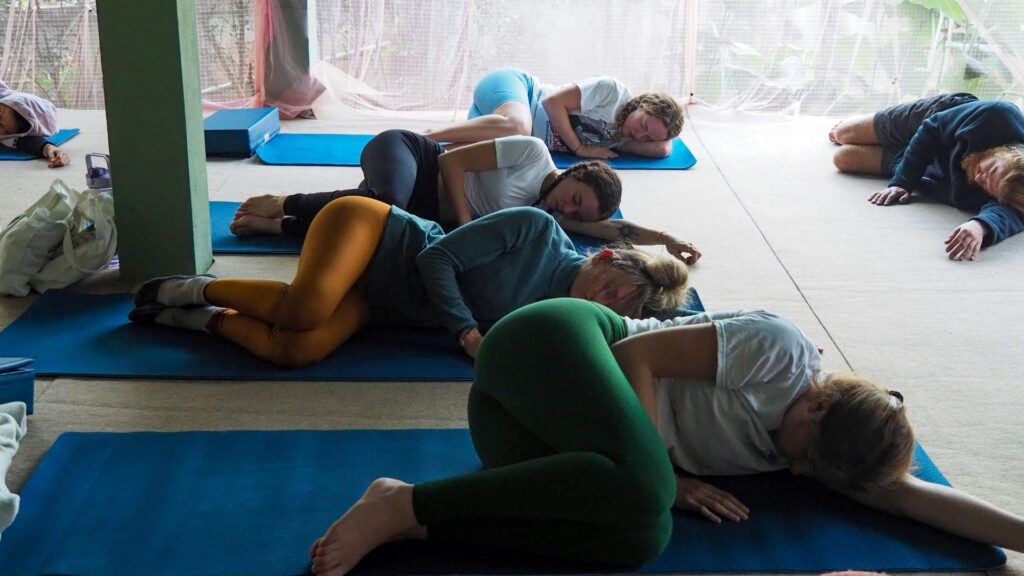
2. Supine Fetal Twist – Restore Digestive Circulation

Roll onto your back.
- Draw knees toward chest.
- Drop knees gently to the left.
- Allow right shoulder to soften toward the floor.
- Rest right hand on your ribs.
Breathe deeply.
Repeat your affirmation.
Switch sides after several breaths.
What’s happening physiologically: Gentle twisting draws fresh blood into the digestive organs and helps regulate the stress response.
What’s happening emotionally: Twists symbolically and physically help release attachments — to expectations, performance, and external validation.
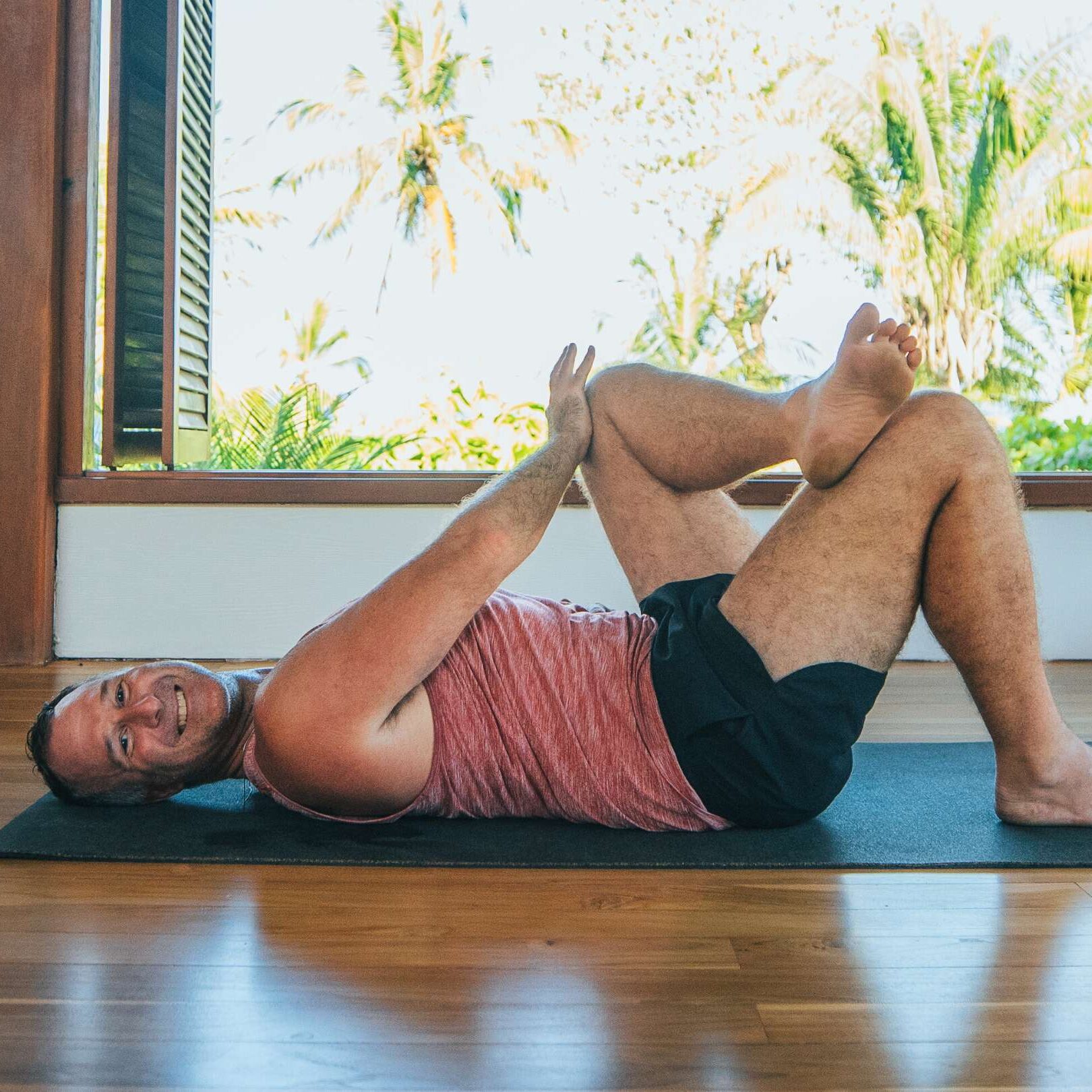
3. Knees-to-Chest Compression Flow
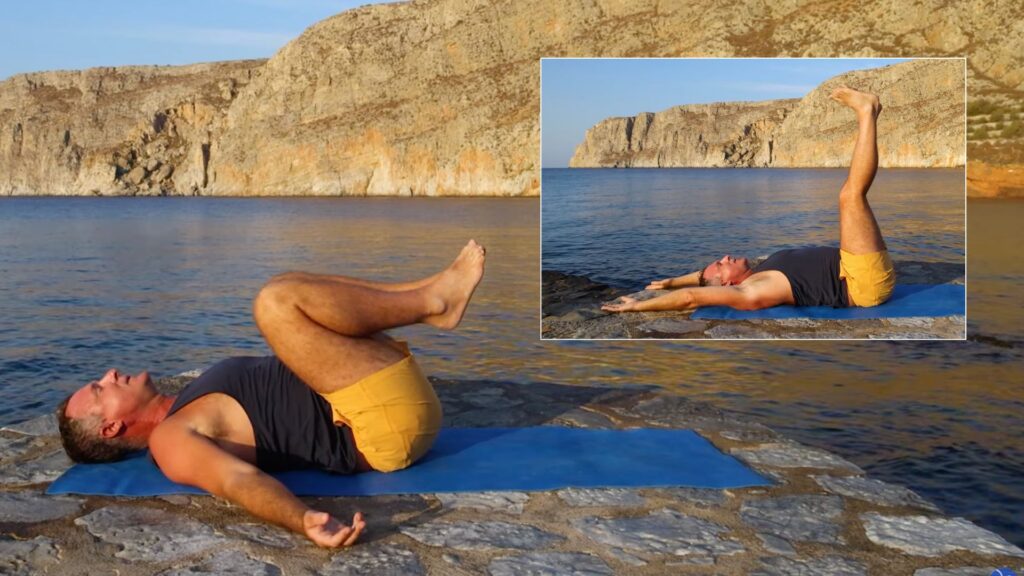
Bring both knees into your chest gently.
- Hug softly — not aggressively.
- Exhale and release feet down.
- Repeat 2–3 times.
Then add movement:
- Inhale: Extend legs upward, sweep arms overhead.
- Exhale: Hug knees back in.
Move slowly with breath.
This compression-release pattern stimulates digestion and enhances parasympathetic activation.
4. Seated Twists – Lift the Heart
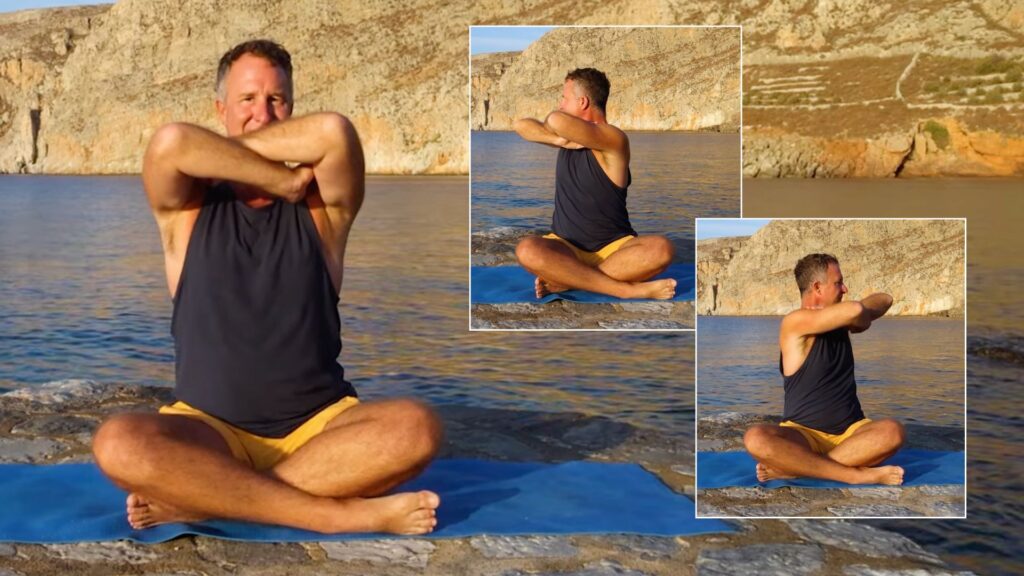
Sit comfortably.
- Cross arms and hold opposite shoulders.
- Inhale: Lift chest and heart.
- Exhale: Twist right.
- Inhale center.
- Repeat 3–4 times.
Switch sides.
To finish, bring hands to heart center. Pause. Recite the affirmation:
I am restored.
I am whole.
Seated twists relieve residual tension and support upright, confident posture — reinforcing emotional resilience.
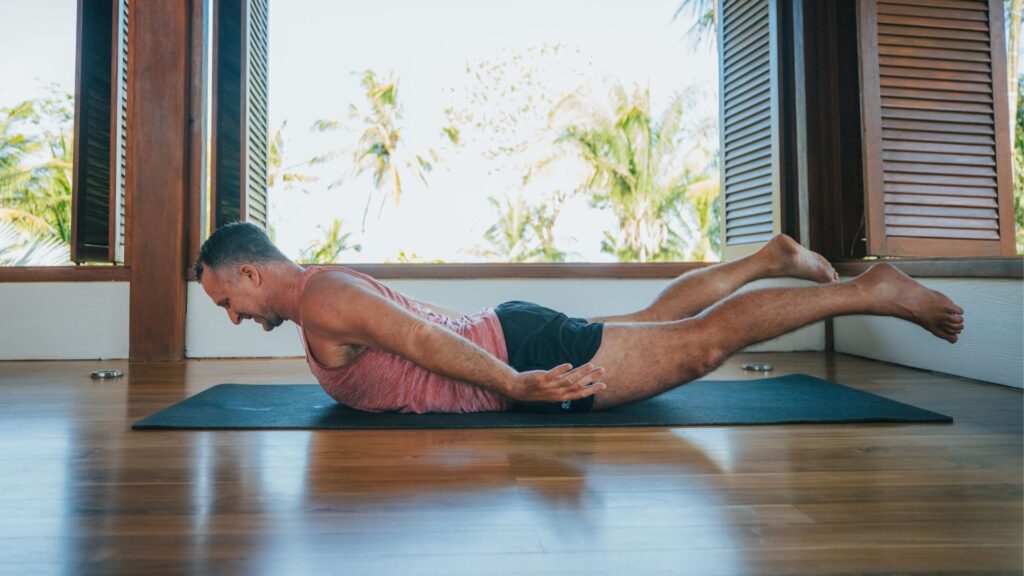
5. Gentle Locust Lift – Intentional but Soft Effort
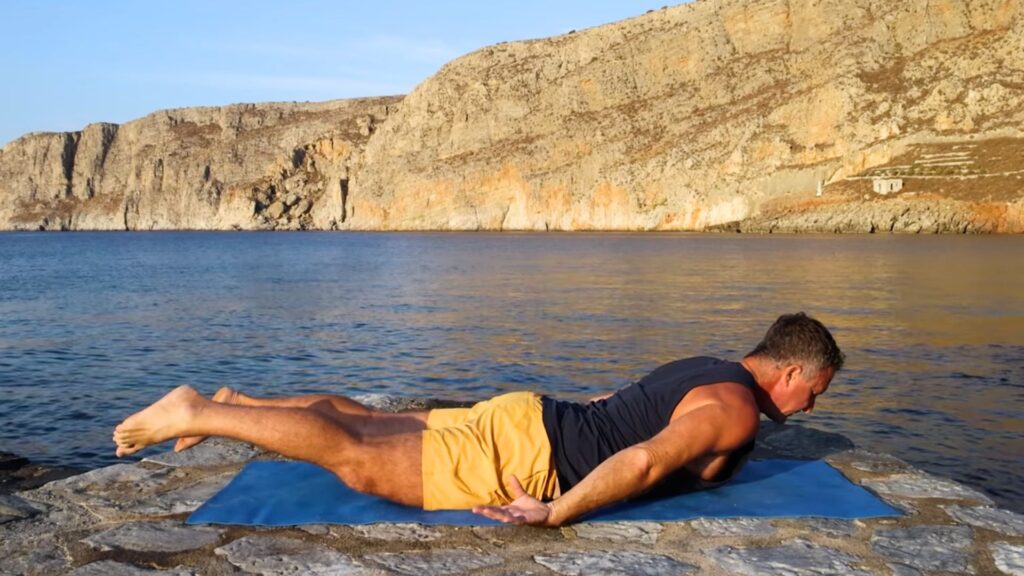
Return to your stomach.
- Arms beside the body.
- Lift chest and legs slightly.
- Focus on lower belly breathing.
- Lower down and rest your forehead.
Repeat 2–3 times.
Do not strain. Loosen effort. Let intention replace intensity.
6. Return to Crocodile Pose – Integration
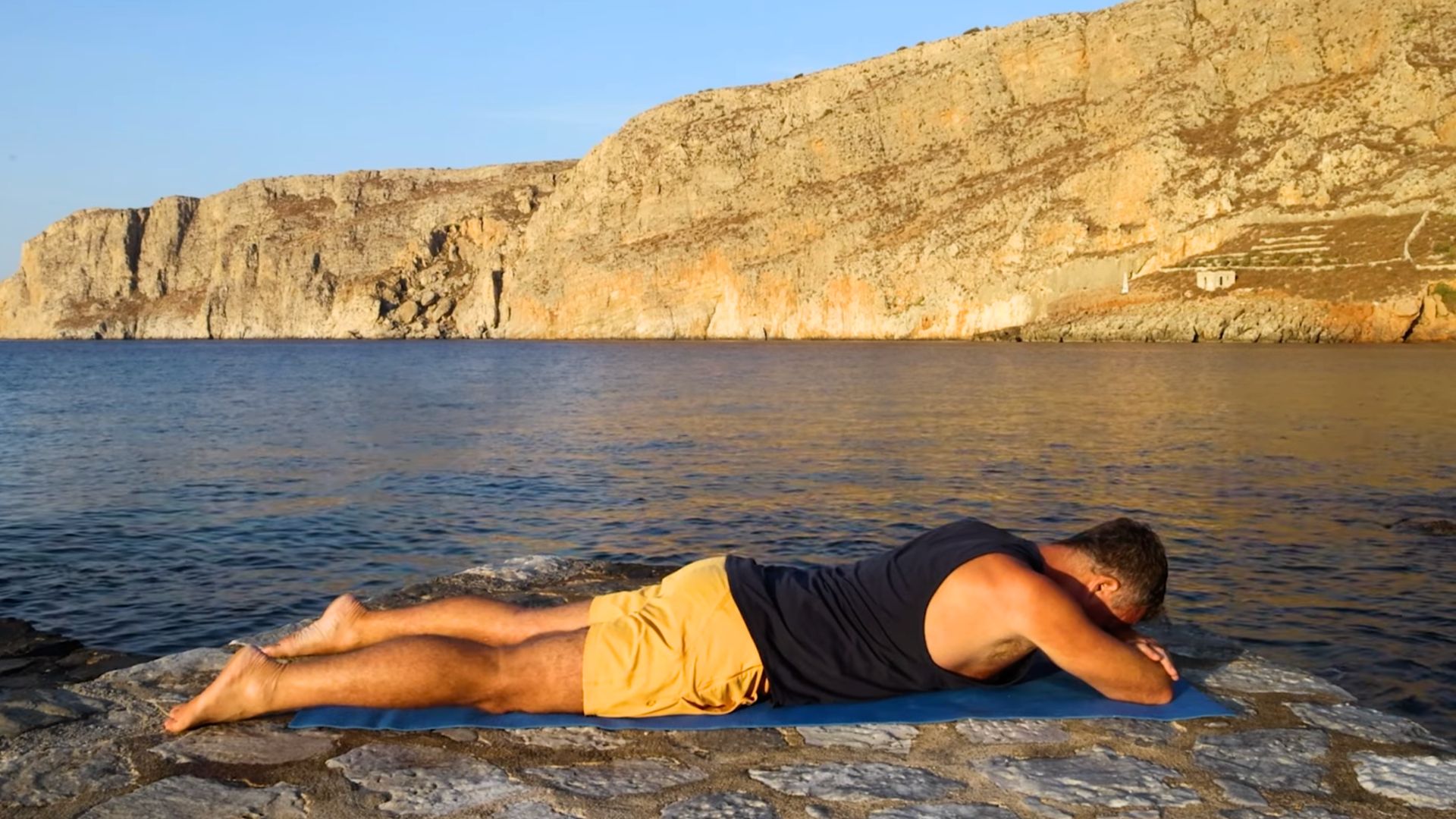
End where you began.
Forehead resting on forearms. Belly breathing deeply.
Allow the affirmation to soak in:
I am restored.
I am whole.
Stay as long as you like.
How This Practice Supports Anxiety Relief
When the nervous system shifts into parasympathetic dominance:
- Heart rate slows
- Cortisol lowers
- Digestion improves
- Mental rumination decreases
That’s why restorative yoga for stress relief also becomes yoga to calm the nervous system.
Practicing this short evening yoga routine consistently can:
- Reduce nighttime anxiety
- Improve sleep quality
- Ease digestive discomfort
- Increase emotional clarity
Making This a Daily Ritual
You don’t need an hour. Even 15 minutes of intentional parasympathetic yoga practice can retrain your body’s stress response.
Try practicing:
- After work
- Before bed
- During emotional overwhelm
- After travel
- Following conflict or intense conversations
The key is repetition.
Frequently Asked Questions About Restorative Yoga for Stress Relief
How often should I practice restorative yoga for stress relief?
Ideally, 3–5 times per week. Even short daily practices significantly improve nervous system resilience.
Is restorative yoga good for anxiety?
Yes. Because it activates the parasympathetic nervous system, restorative yoga helps regulate anxiety by calming physiological stress responses.
Can this practice improve digestion?
Yes. Gentle twists and belly breathing restore circulation to digestive organs, supporting gut health.
Is this a good short evening yoga routine?
Absolutely. The slow pace and nervous system focus make it ideal before bed.
From Personal Practice to Deeper Transformation
At Blue Osa Yoga Retreat & Spa, we teach that yoga is not just about poses — it’s about restoring your relationship with yourself.
Through the integration of anatomy, breath science, and mindfulness practices taught by Yogi Aaron, students in our Yoga Teacher Training programs learn:
- How to regulate their own nervous systems
- How stress impacts digestion and sleep
- How to teach restorative yoga for stress relief effectively
- How to use affirmation and bhavana intentionally
This work changes lives — not just physically, but emotionally and spiritually.
When you understand how to move from survival to restoration, you stop reacting to life and start living it consciously.
Practice Now on YouTube: Coming Back to Wholeness
Stress pulls you outward. Yoga brings you inward. Each time you pause to breathe deeply into your lower belly, you are reclaiming your center.
Each time you repeat:
I am restored.
I am whole.
You are reminding yourself that wholeness is not something you earn. It is something you return to.
Practice this restorative yoga for stress relief regularly. Let it become your anchor. Your reset. Your sacred pause.
And when you rise from the mat, carry that parasympathetic calm into your work, your relationships, and your purpose.
Want to take your yoga journey deeper?
Explore our Yoga Teacher Trainings at Blue Osa Yoga Retreat + Spa in Costa Rica and experience the transformation of a yoga practice rooted in stability, strength, and purpose. Your body will thank you.
About The Author, Yogi Aaron
Yogi Aaron is the founder and creator of Applied Yoga Anatomy + Muscle Activation™ (AYAMA), a revolutionary methodology
that challenges conventional approaches to yoga. Using a science-backed approach, he prioritizes muscle activation over traditional stretching.
With over three decades of dedicated study, mentorship, and hands-on experience, he has established himself as a leading expert in yoga therapy, alignment, and pain-free movement.
As owner and operator of Blue Osa Yoga Retreat + Spa in Costa Rica, Yogi Aaron leads transformative programs that combine his expertise in yoga instruction, retreat facilitation, and wellness business operations. His work spans both in-person immersive experiences and digital education through The Yogi Club online platform and the AYAMA™ Certification Program.
Yogi Aaron’s teaching methodology represents a paradigm shift in modern yoga practice. AYAMA focuses on activating and engaging muscles to enhance range of motion, build strength, improve stability, and optimize alignment—while reducing pain and injury risk. This evidence-based approach has positioned him as a thought leader challenging the status quo in the yoga community.
His mission extends beyond the mat: to liberate individuals from chronic pain and guide them toward discovering yoga’s authentic purpose through intelligent, body-informed practice.
Learn more about training opportunities with Yogi Aaron at Blue Osa Yoga Retreat + Spa.
Check out these other popular posts!