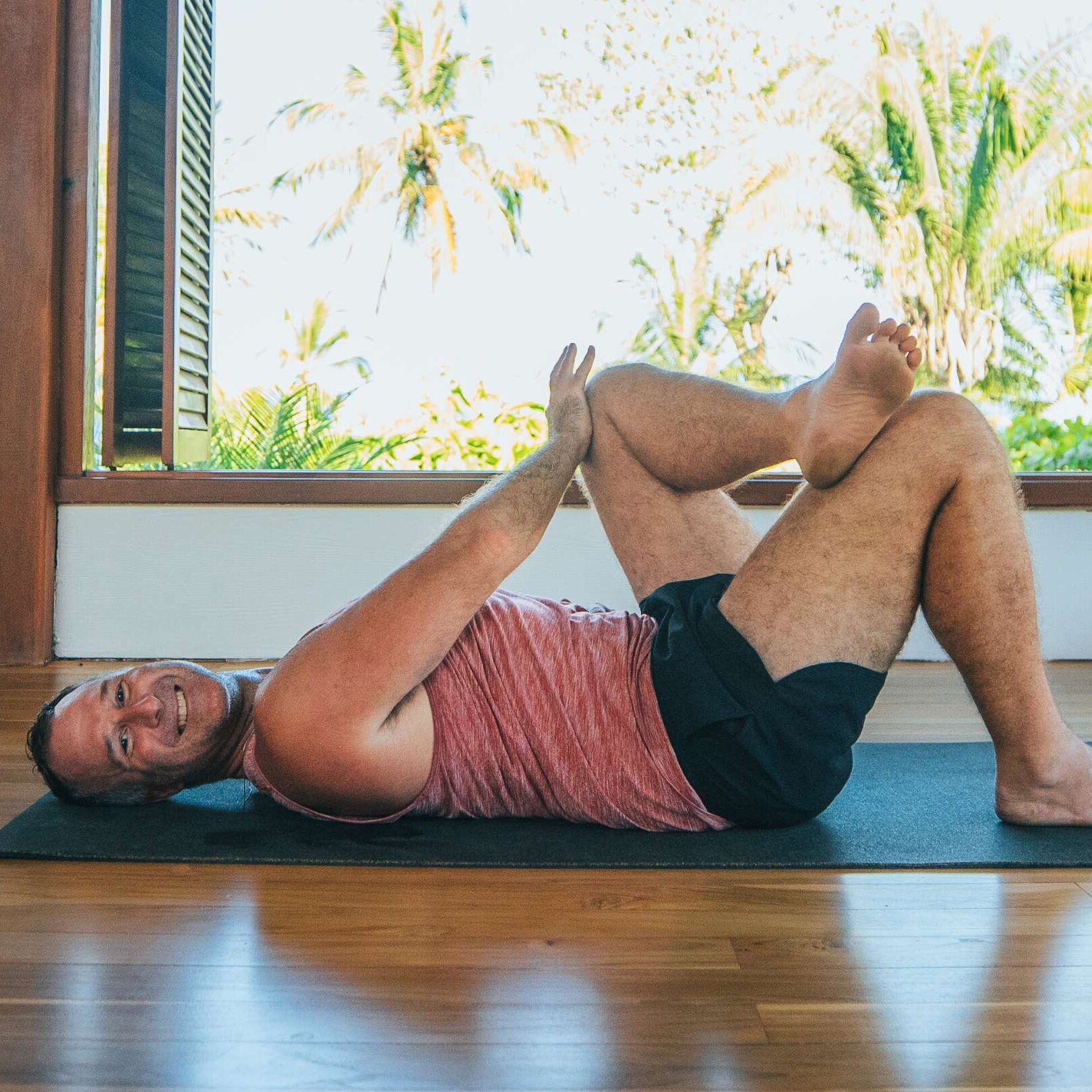
Herniated Disc From Yoga: How Yogi Aaron Faced Down Spinal Fusion Surgery
A herniated disc from yoga is not something most people expect — least of all a teacher who has spent decades on the mat. But that is exactly what happened to Yogi Aaron. After more than twenty-five years of daily practice and teaching, his own yoga practice herniated a disc in his lower back and put him in a surgeon’s office facing spinal fusion surgery. The hardest part? He was doing everything he had been taught to do.
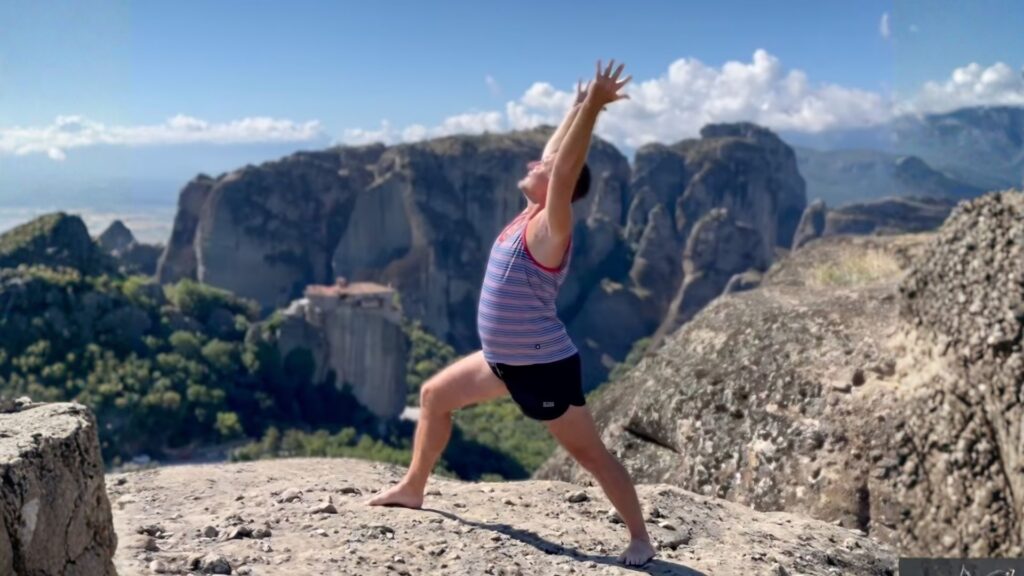
His story is a turning point that reshaped how he understands the body and how he teaches yoga. If you have ever stretched harder to chase away back pain, only to watch it come roaring back, this is worth reading to the end.
You’ll learn:
- How a Herniated Disc From Yoga Landed Yogi Aaron in a Surgeon’s Office
- The Turning Point: Muscle Activation Instead of the Scalpel
- Why Passive Stretching Can Leave Your Spine Exposed
- The AYAMA™ Method: Activate Before You Stretch
- What This Means for Your Own Practice
- How You Can Learn AYAMA™ in Costa Rica with Yogi Aaron
How a Herniated Disc From Yoga Landed a Veteran Teacher in a Surgeon’s Office
Yogi Aaron had been teaching yoga for more than twenty years, training under some of the most respected teachers in the world. For most of those years, he taught people to stretch—because that is what he was taught, and what nearly everyone is taught.
Then his own body began to argue with the method. He started dealing with significant pain in his lower back. His response was the same one almost every yoga teacher reaches for: stretch it out. More forward folds. More pigeon pose. More child’s pose. Longer holds, sinking deeper into each shape.
For a few minutes after each practice, the tension would ease, and the relief felt real. He would think, okay, it’s working. And then, within thirty minutes — sometimes less — the pain came back worse than before.
So he kept stretching. And the pain kept returning, until one morning he couldn’t walk properly.
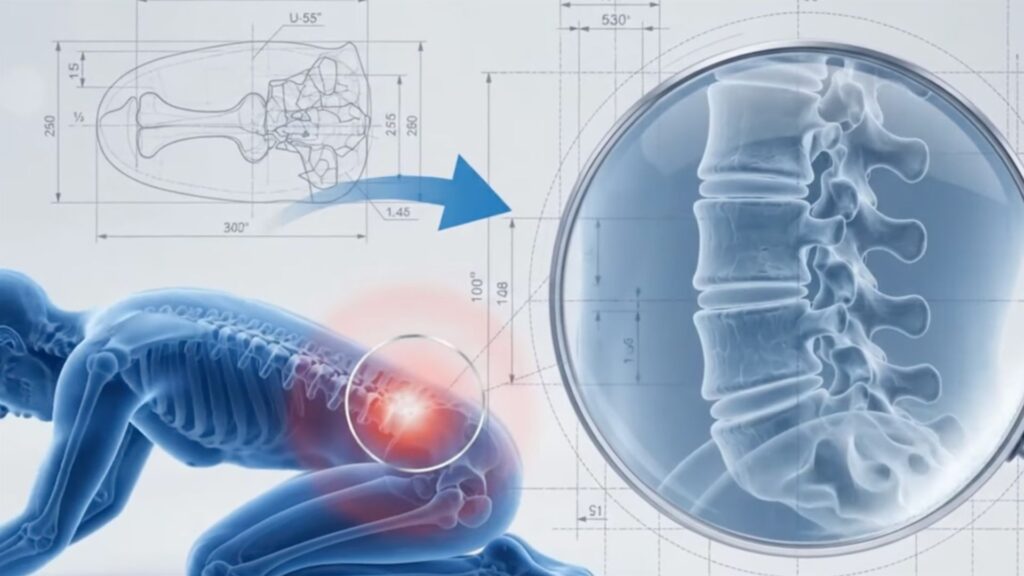
An MRI confirmed what he feared: a herniated disc pressing on the nerves in his lower back, compressing the sciatic nerve and sending radiating pain down his leg. The orthopedic surgeon’s recommendation was spinal fusion surgery — permanently fusing his vertebrae together so he could function normally. He was forty-five years old and had practiced yoga almost every day of his adult life.
Sitting in that office, one thought took hold: if yoga did this, something is fundamentally broken in how I’ve been practicing and teaching it.
The Turning Point: Muscle Activation Instead of the Scalpel
Yogi Aaron declined the surgery. He managed the inflammation with steroid injections, and the moment he could travel, he flew across the country to see a specialist trained in Muscle Activation Technique (MAT).
The specialist, Eric, worked on him for eight consecutive days — and those eight days upended everything Yogi Aaron thought he knew about the body. Eric wasn’t stretching him. He wasn’t chasing more flexibility or more range of motion. He was doing the opposite: testing which muscles had lost their neurological connection, and switching them back on.
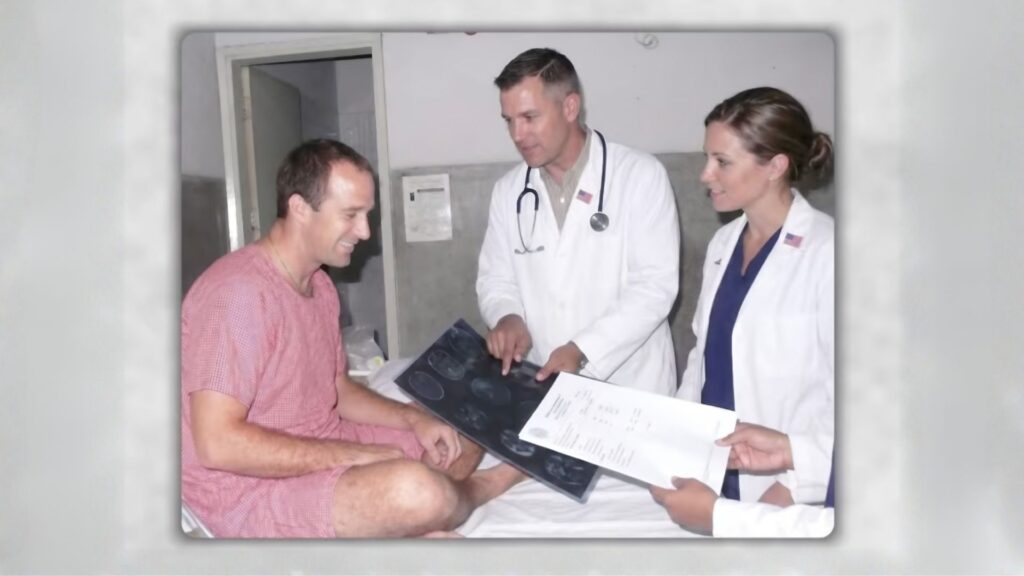
(Every body and every injury is different. Yogi Aaron’s path was his own — if you’re facing a diagnosis, work with a qualified professional to weigh your options.)
After those eight days, Yogi Aaron went home to Costa Rica pain-free for the first time in years, carrying one burning question: how had he spent more than twenty-five years teaching yoga without understanding any of this?
Why Passive Stretching Can Leave Your Spine Exposed
Here is the principle that changed everything.
Every muscle in your body receives a signal from your nervous system telling it to contract, engage, and stabilize the joints it is meant to protect. When that signal gets disrupted — through injury, chronic stress, or passive overstretching — the muscle goes quiet. It stops doing its job, and the body compensates by loading other structures that were never designed to carry it. That is where pain comes from.
Yogi Aaron’s herniated disc wasn’t the result of a single dramatic injury. It was the result of years of passively overstretching the muscles that were supposed to support and protect his spine — until those muscles stopped firing and his spine became vulnerable. (For a clinical overview of how a herniated disc affects the nerves of the lower back, MedlinePlus is a useful reference.)
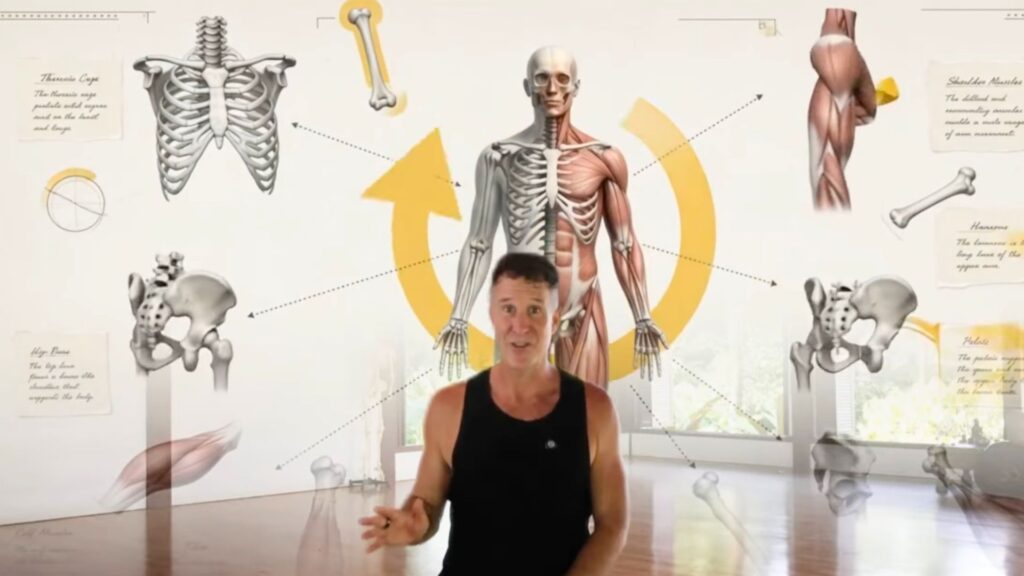
Your spine is stabilized by deep muscles connecting to each joint — the multifidus, the spinal erectors, the deep rotators. When they are working, the spine is protected. When they go quiet, it is exposed. And what Yogi Aaron discovered is that the long-held, gravity-assisted poses that fill most yoga classes neurologically inhibit those stabilizing muscles. Passive stretching doesn’t strengthen them or activate them. It tells them to stand down.
What switches them back on is the opposite of stretching: contraction. Asking a muscle to generate force, to engage, to stabilize — and building that capacity over time.
The AYAMA™ Method: Activate Before You Stretch
Out of this discovery, Yogi Aaron built a method he calls AYAMA™ — Applied Yoga Anatomy + Muscle Activation. At its core it is a simple reordering of priorities:
- Stabilize before you stretch
- Activation before extension
- Function before flexibility
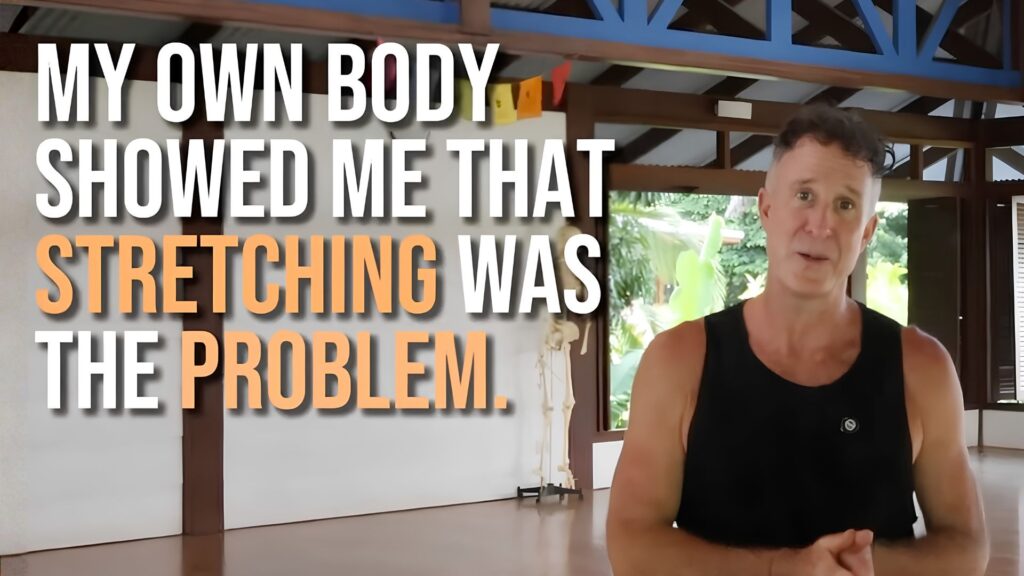
It is the practice of turning the right muscles on before you ask your body to move. Once you understand this, you can’t unsee it. Every pose becomes a question: am I activating this muscle, or am I shutting it down? This is the shift at the heart of Yogi Aaron’s message to stop stretching your way through pain.
What This Means for Your Own Practice
If your back pain keeps returning no matter how much yoga you do, it may not be because you aren’t stretching enough. It may be because stretching is quietly switching off the very muscles meant to hold you together.
That doesn’t mean yoga is the problem. It means how most yoga is taught deserves a second look. The standard 200-hour teacher training rarely asks why a herniated disc happens, what passive stretching does to the muscles that support the spine, or how to read what is actually going on in a student’s body — or your own — when pain won’t let go.
Watch Yogi Aaron’s YouTube video now explaining all of this. But beware, once you understand what he shares with you, you will never be able to practice yoga the same again.
Learn AYAMA™ — In Costa Rica or Online
Yogi Aaron now teaches this approach at his 14-day immersion at Blue Osa in Costa Rica — a 200-hour yoga teacher training built entirely around AYAMA™. Students consistently find that roughly eighty percent of what they cover was never touched in their previous trainings. Not because their teachers were bad, but because standard programs simply don’t go here.
And if you can’t travel right now, you can start learning the method from anywhere through the online course.
Because once you stop asking your body to stretch through pain and start asking it to stabilize, everything about your practice can change.
About The Author, Yogi Aaron
Yogi Aaron is the founder and creator of Applied Yoga Anatomy + Muscle Activation™ (AYAMA), a revolutionary methodology
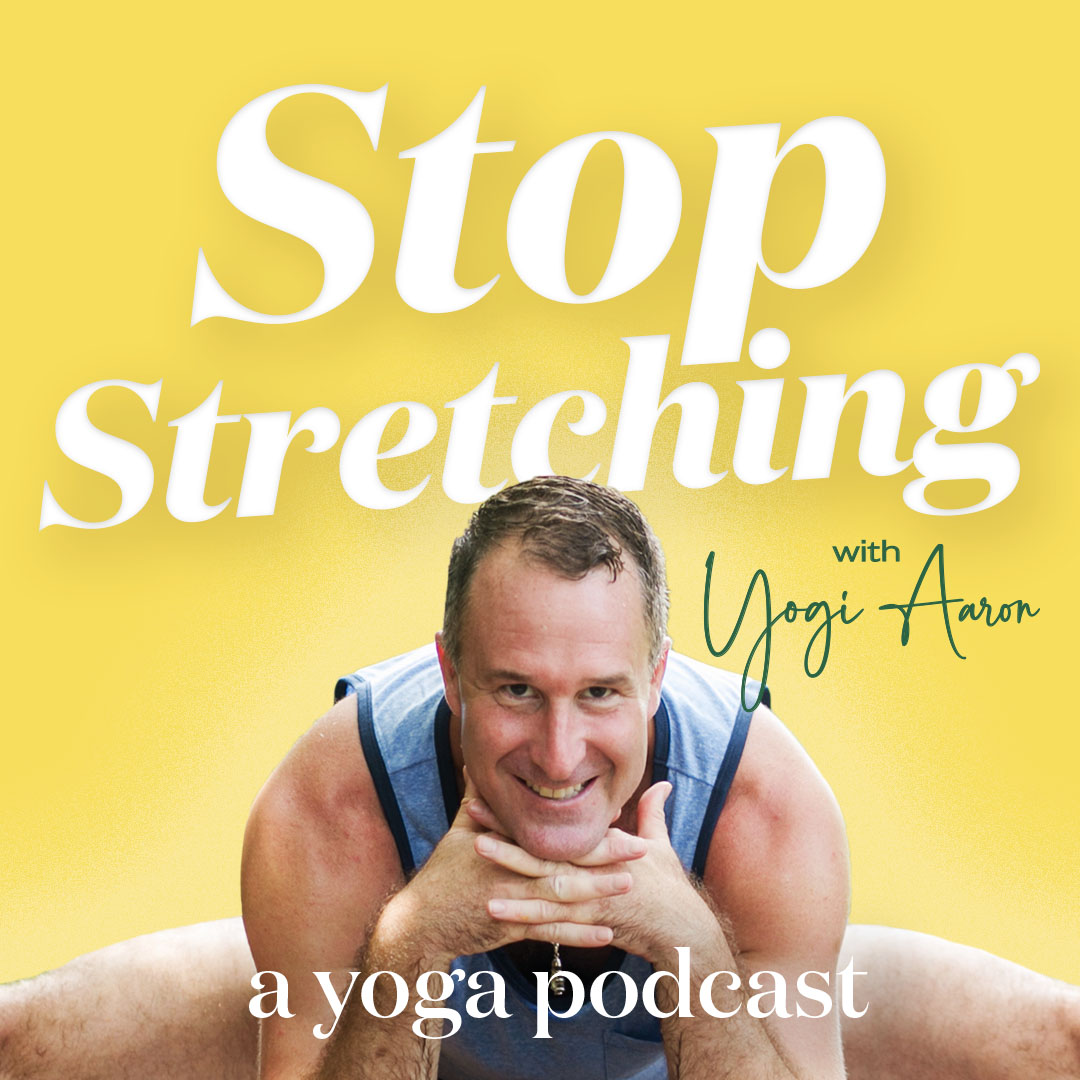
that challenges conventional approaches to yoga. Using a science-backed approach, he prioritizes muscle activation over traditional stretching.
With over three decades of dedicated study, mentorship, and hands-on experience, he has established himself as a leading expert in yoga therapy, alignment, and pain-free movement.
As owner and operator of Blue Osa Yoga Retreat + Spa in Costa Rica, Yogi Aaron leads transformative programs that combine his expertise in yoga instruction, retreat facilitation, and wellness business operations. His work spans both in-person immersive experiences and digital education through The Yogi Club online platform and the AYAMA™ Certification Program.
Yogi Aaron’s teaching methodology represents a paradigm shift in modern yoga practice. AYAMA focuses on activating and engaging muscles to enhance range of motion, build strength, improve stability, and optimize alignment—while reducing pain and injury risk. This evidence-based approach has positioned him as a thought leader challenging the status quo in the yoga community.
His mission extends beyond the mat: to liberate individuals from chronic pain and guide them toward discovering yoga’s authentic purpose through intelligent, body-informed practice.
Learn more about training opportunities with Yogi Aaron at Blue Osa Yoga Retreat + Spa.
Check out these other popular posts!