How to Heal Plantar Fasciitis Naturally (Without Endless Stretching)
If you’re searching for how to heal plantar fasciitis, you’re probably tired of the pain.
That sharp heel sensation in the morning.
The tenderness along your arch.
The discomfort that makes every step feel like a challenge.
Plantar fasciitis can be incredibly frustrating — especially when conventional treatments only provide temporary relief.
The good news?
You don’t have to rely on endless stretching, orthotics, or injections.
There is another way.

What Is Plantar Fasciitis?
Before we discuss how to heal plantar fasciitis, let’s clarify what it actually is.
Plantar fasciitis occurs when the thick band of tissue connecting your heel to your toes becomes inflamed. This inflammation is often caused by:
- Overuse
- Poor foot mechanics
- Weak glutes
- Tight or underactive calf muscles
- Weak anterior tibialis
- Collapsing arches
Common symptoms include:
- Sharp heel pain (especially in the morning)
- Tenderness along the arch
- Pain after standing long periods
- Difficulty walking comfortably
Most treatments focus on symptom management.
But true recovery requires addressing the root cause.
Why Stretching Alone Often Fails
Many people believe stretching is the solution.
But if you’ve been stretching your calves and arches for months and still have pain, you already know something isn’t working.
Here’s why:
- Stretching inflamed tissue can increase irritation
- Passive treatments don’t build strength
- Orthotics may reduce symptoms but don’t fix muscle weakness
- Rest alone doesn’t restore proper mechanics
If you really want to understand how to heal plantar fasciitis, you must focus on muscle activation.
Weak muscles create strain.
Activated muscles reduce strain.

The Activation-Based Approach to Healing Plantar Fasciitis
The AYAMA method focuses on strengthening the muscles that support:
- The arch
- The heel
- The ankle
- The hip
- The core
Because here’s the truth:
Your foot pain may actually start at your glutes.
Yes — your glutes.
Think of them as your body’s suspension system. If they’re weak, impact forces travel down into your knees and feet.
Let’s explore three powerful exercises you can start today.
1. Glute Activation Bridge
If you want to heal plantar fasciitis, start higher up the chain.
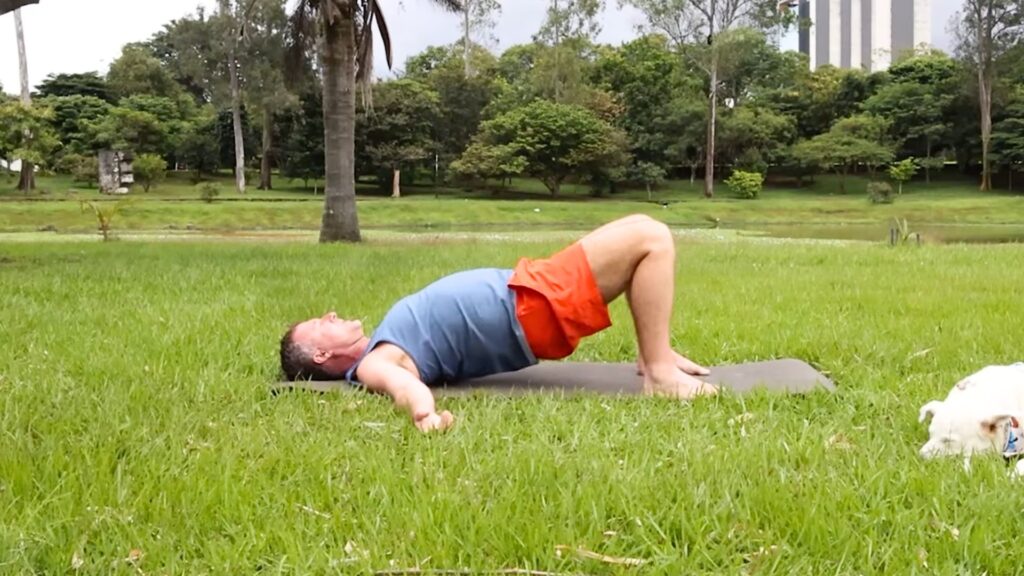
How to Do It:
- Lie on your back.
- Bend your knees.
- Press firmly into your heels.
- Lift your hips.
- Squeeze your glutes for 6 seconds.
- Lower slowly.
Repeat 6 times.
Why this works:
Strong glutes absorb force during walking and running. When they’re weak, that stress shifts downward into the plantar fascia.
This exercise alone can dramatically reduce foot strain.
2. Foot Point Activation (Instead of Stretching)
This replaces aggressive stretching with activation.
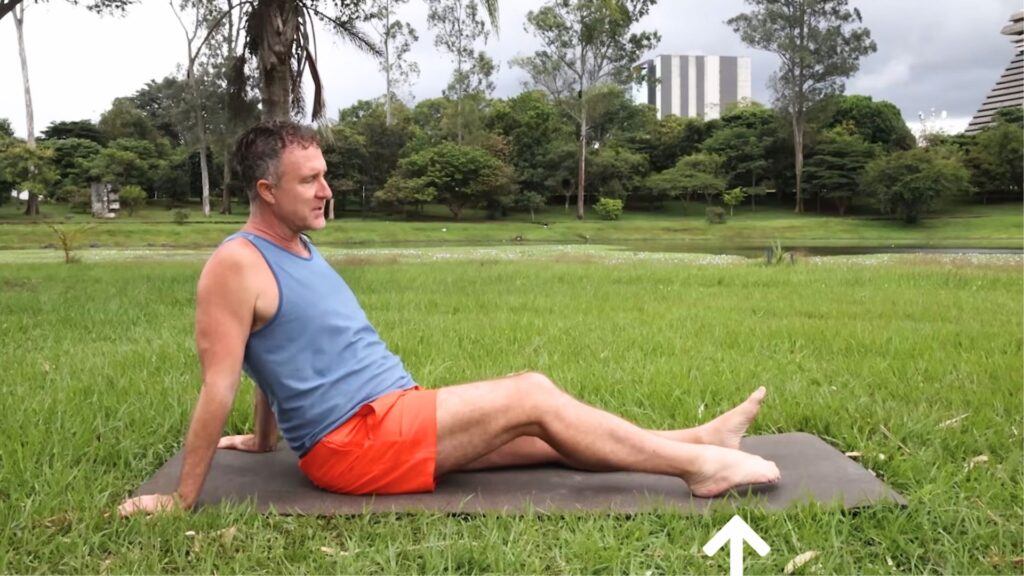
How to Do It:
- Bend one knee slightly.
- Point the foot.
- Press through the ball of the foot (especially under the big toe).
- Lightly curl the toes.
- Hold for 6 seconds.
- Relax.
Repeat 6 times per side.
This activates:
- Intrinsic foot muscles
- Calf stabilizers
- Arch-supporting structures
Unlike stretching, this builds strength — which is essential when learning how to heal plantar fasciitis long-term.
3. Anterior Tibialis Activation
This muscle is critical for arch support.
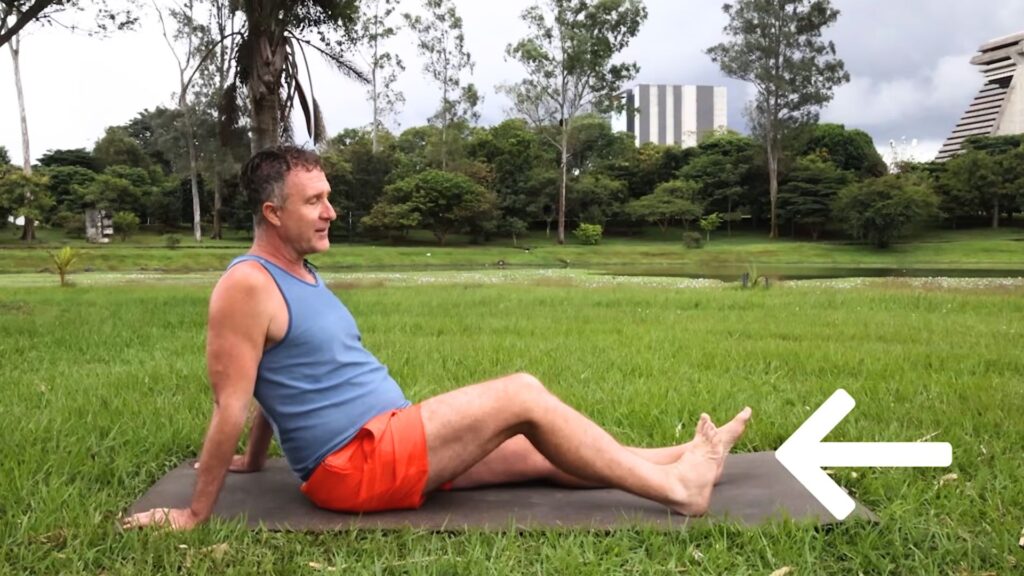
How to Do It:
- Bend the knee slightly.
- Flex the foot strongly.
- Pull from just below the first and second toe toward the knee.
- Hold for 6 seconds.
- Relax.
Repeat 6 times per side.
The anterior tibialis helps lift and maintain the arch of the foot. When it’s weak, the arch collapses and places stress on the plantar fascia.
Strengthening this muscle is one of the most overlooked keys in healing plantar fasciitis.
Common Myths About Plantar Fasciitis
Myth 1: Rest Is the Only Way to Heal
Truth: Targeted activation speeds recovery.
Myth 2: You Need Expensive Orthotics
Truth: Strength creates long-term support.
Myth 3: Stretching Fixes Everything
Truth: Stretching provides temporary relief — activation solves the root cause.
If you truly want to know how to heal plantar fasciitis permanently, strength must replace passive dependence.
Additional Tips to Support Healing
To accelerate results:
- Practice walking barefoot (when appropriate)
- Strengthen your core (especially transverse abdominis)
- Avoid aggressive stretching
- Use supportive footwear when necessary
- Massage the foot gently to improve circulation
Consistency is key.
Daily activation produces lasting results.
Why Sustainable Healing Matters
Many conventional treatments focus on short-term pain relief.
But if you’re serious about learning how to heal plantar fasciitis, your goal should be:
- Long-term strength
- Proper gait mechanics
- Improved arch stability
- Empowerment through understanding
Healing isn’t passive.
It’s participatory. Do the full practice now with Yogi Aaron on YouTube!
Want to Go Deeper?
Understanding foot pain requires understanding the whole body.
Inside our Yoga Teacher Training at Blue Osa in Costa Rica, we teach anatomy, muscle activation, and functional movement so you can:
- Understand the true causes of pain
- Strengthen intelligently
- Support your students safely
- Restore mobility naturally
If you’re ready to stop chasing symptoms and start addressing root causes, explore our upcoming trainings.
Because plantar fasciitis doesn’t have to control your life.
You can walk confidently again.
About The Author, Yogi Aaron
Yogi Aaron is the founder and creator of Applied Yoga Anatomy + Muscle Activation™ (AYAMA), a revolutionary methodology
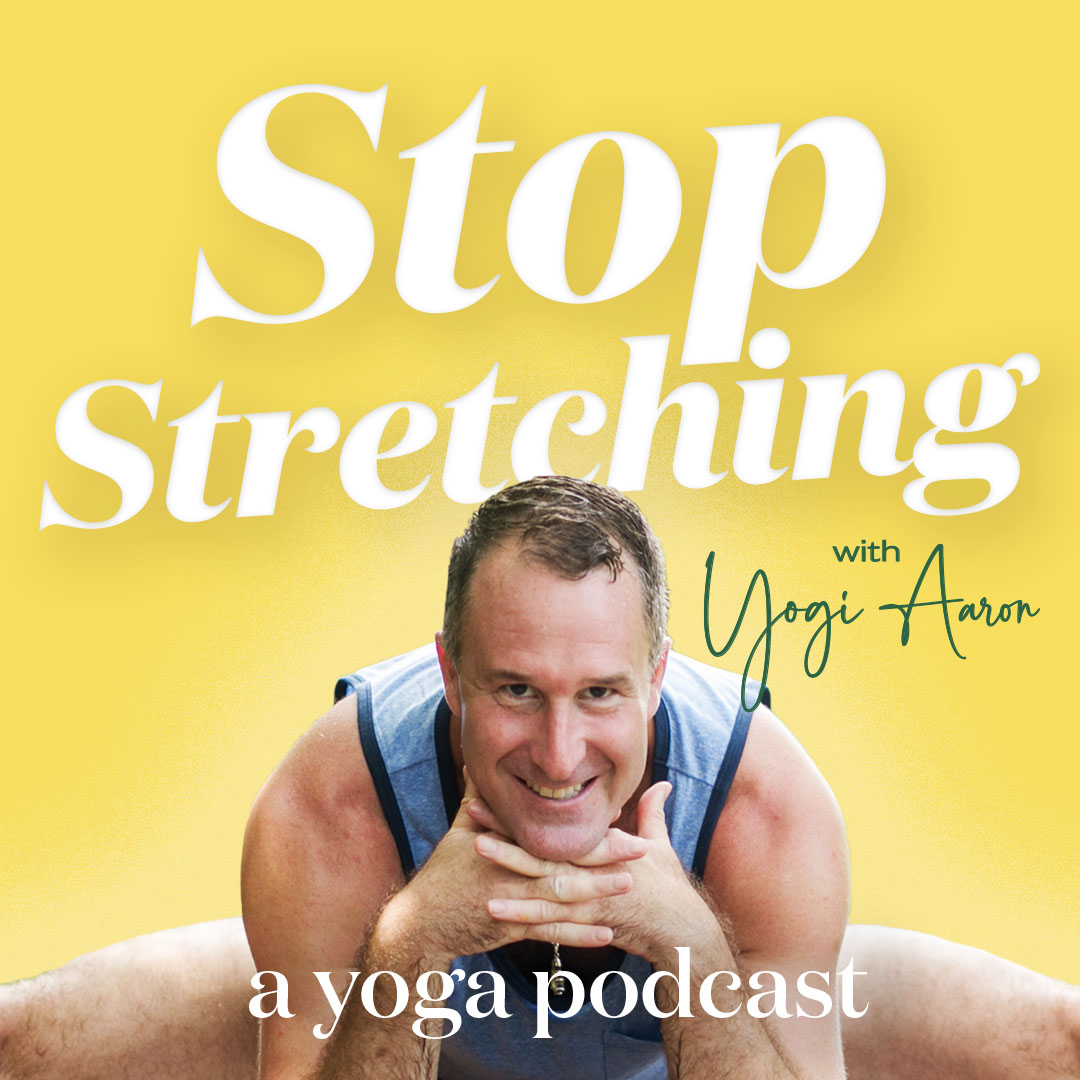
that challenges conventional approaches to yoga. Using a science-backed approach, he prioritizes muscle activation over traditional stretching.
With over three decades of dedicated study, mentorship, and hands-on experience, he has established himself as a leading expert in yoga therapy, alignment, and pain-free movement.
As owner and operator of Blue Osa Yoga Retreat + Spa in Costa Rica, Yogi Aaron leads transformative programs that combine his expertise in yoga instruction, retreat facilitation, and wellness business operations. His work spans both in-person immersive experiences and digital education through The Yogi Club online platform and the AYAMA™ Certification Program.
Yogi Aaron’s teaching methodology represents a paradigm shift in modern yoga practice. AYAMA focuses on activating and engaging muscles to enhance range of motion, build strength, improve stability, and optimize alignment—while reducing pain and injury risk. This evidence-based approach has positioned him as a thought leader challenging the status quo in the yoga community.
His mission extends beyond the mat: to liberate individuals from chronic pain and guide them toward discovering yoga’s authentic purpose through intelligent, body-informed practice.
Learn more about training opportunities with Yogi Aaron at Blue Osa Yoga Retreat + Spa.
Check out these other popular posts!